Best 5 1990s Insert Sets Worth Collecting Today
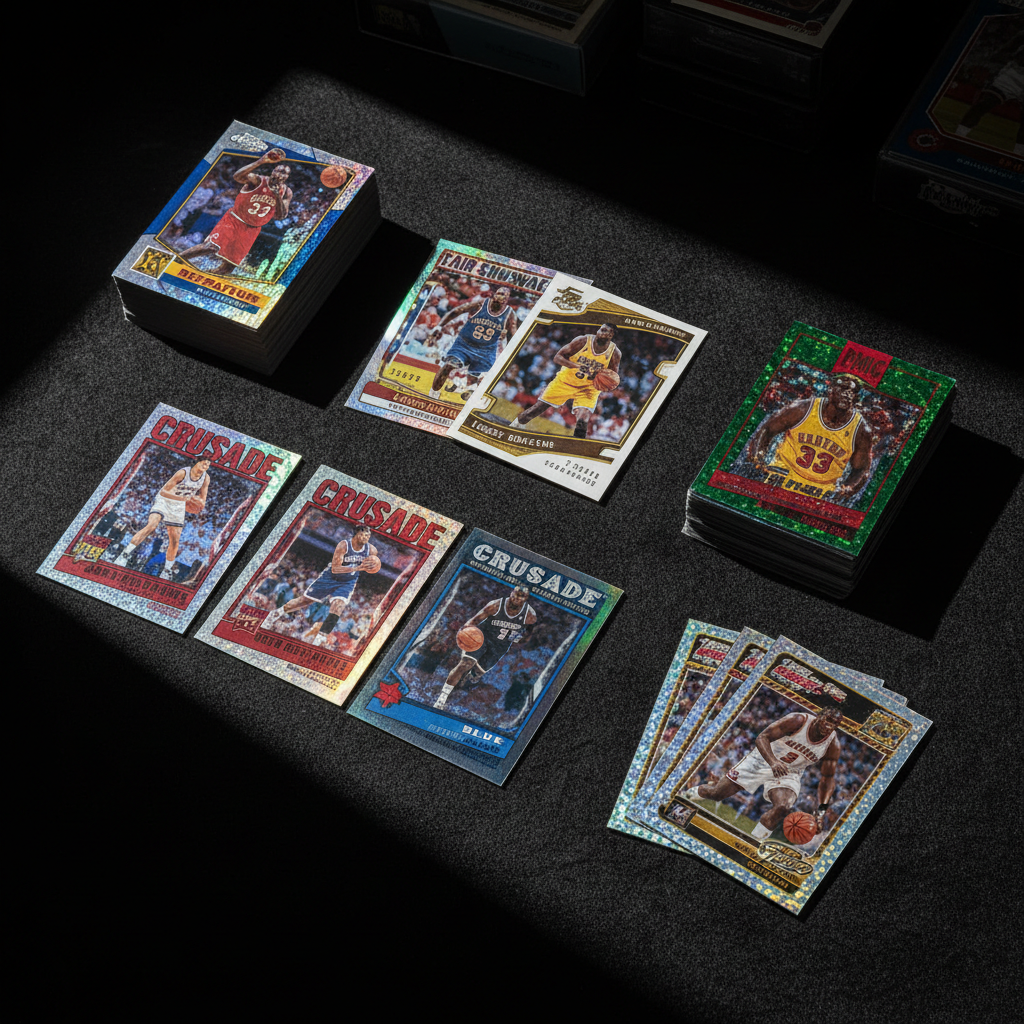
The 1990s produced some of the most iconic and valuable insert sets in hobby history, but not all are created equal. This guide provides a definitive ranking of the top five 1990s insert sets that represent the best value and long-term investment potential for serious collectors today. We analyzed dozens of iconic sets, focusing on a combination of rarity, design innovation, player selection, and current market value, particularly in high-grade examples. Our methodology prioritized sets with low print runs, a high concentration of Hall of Fame players, and a proven track record of value appreciation. Key takeaways include the enduring dominance of PMG chemistry, the underappreciated value of early Jambalaya cards, and the surprising affordability of high-grade Skybox E-X credentials. This is your roadmap to acquiring the most coveted cardboard of the junk wax era.
How We Picked
- Print Run/Rarity
- Design & Aesthetics
- Player Checklist & Rookie Importance
- Investment Potential
At a Glance
| Rank | Pick | Best For | Price Range |
|---|---|---|---|
| 1 | 1997-98 Metal Universe Precious Metal Gems (PMG) | The advanced collector with a significant budget looking for a cornerstone piece. | $5,000-$50,000+ for mid-tier stars, $100,000+ for top-tier players. |
| 2 | 1996-97 Skybox E-X2000 Credentials | The investor focused on key rookie cards from a legendary class. | $1,000-$5,000 for stars, $15,000+ for top rookies in high grade. |
| 3 | 1997-98 Fleer Ultra Stars Gold | The set builder who appreciates a challenge and a classic 90s aesthetic. | $500-$1,500 for commons, $5,000-$15,000 for superstars. |
| 4 | 1997-98 SPx Grand Finale | The rarity chaser who wants one of the scarcest inserts of the decade. | $8,000-$25,000+ depending on the player and grade. |
| 5 | 1997-98 Skybox E-X2001 Jambalaya | The collector who values aesthetics and cultural impact as much as rarity. | $1,000-$4,000 for common players, $15,000+ for Michael Jordan. |
1. 1997-98 Metal Universe Precious Metal Gems (PMG)
The undisputed king of 1990s inserts.
With a print run of only 100 (the first 10 being Green, the other 90 being Red), PMGs are the benchmark for rarity and value in modern cards. The iconic foil design and the sheer difficulty of finding well-centered, high-grade examples make them a true grail for any serious collector. A Michael Jordan PMG Green selling for over $350,000 in a PSA 6 demonstrates their blue-chip status.
Best for: The advanced collector with a significant budget looking for a cornerstone piece.
Price range: $5,000-$50,000+ for mid-tier stars, $100,000+ for top-tier players.
Pros
- Extremely low print run
- Iconic, condition-sensitive design
- Features a checklist of superstars
Cons
- Exorbitantly expensive, even for common players
- Prone to chipping and surface wear
2. 1996-97 Skybox E-X2000 Credentials
A lesson in tiered rarity and beautiful design.
Numbered to just 499, the Credentials parallel was one of the first truly scarce, serial-numbered inserts. The stunning acetate design and the use of a tiered player system (rookies like Kobe Bryant are far more sought after) created a chase that still resonates today. A PSA 10 Kobe Bryant recently fetched over $45,000, cementing its place as a key rookie-era card for a generation-defining player.
Best for: The investor focused on key rookie cards from a legendary class.
Price range: $1,000-$5,000 for stars, $15,000+ for top rookies in high grade.
Pros
- Early serial-numbered insert
- Acetate stock is visually stunning
- Strong rookie class
Cons
- Acetate is prone to scratching
- Can be difficult to distinguish from the base E-X2000 at a glance
3. 1997-98 Fleer Ultra Stars Gold
The tougher, more valuable 'Stars' insert.
While the base 'Stars' inserts were common, the Gold parallel was a true case hit, estimated to have a print run of less than 100. The shimmering gold foil and star-studded checklist make it a beautiful and desirable set. A Michael Jordan PSA 10 can command upwards of $10,000, while even mid-tier Hall of Famers like Scottie Pippen or Grant Hill fetch four figures.
Best for: The set builder who appreciates a challenge and a classic 90s aesthetic.
Price range: $500-$1,500 for commons, $5,000-$15,000 for superstars.
Pros
- Low estimated print run
- Classic, eye-catching foil design
- Affordable entry points for non-superstar players
Cons
- Condition-sensitive foil surface
- Often confused with the more common base version
4. 1997-98 SPx Grand Finale
The original super-short print.
Numbered to just 50, the Grand Finale parallel was one of the most ambitious and limited releases of its time. The holographic background and die-cut design make it a visually striking card. While the player checklist is smaller, the extreme rarity ensures high demand for any player. A Tim Duncan rookie recently sold for over $20,000 in a BGS 9.5, highlighting the set's appeal.
Best for: The rarity chaser who wants one of the scarcest inserts of the decade.
Price range: $8,000-$25,000+ depending on the player and grade.
Pros
- Microscopic print run of 50
- Features a key Tim Duncan rookie card
- Unique holographic design
Cons
- Die-cut design is prone to damage
- Smaller checklist than other sets on this list
5. 1997-98 Skybox E-X2001 Jambalaya
The most fun and visually creative insert of the 90s.
Jambalaya inserts were an immediate hit thanks to their unique oval die-cut and vibrant, almost psychedelic, designs. With an insertion rate of 1:720 packs, they are significantly scarcer than their cartoonish look might suggest. The 1997-98 set is particularly important as it features the Michael Jordan Jambalaya, one of his most iconic and sought-after 90s cards, routinely selling for over $20,000 in a PSA 9.
Best for: The collector who values aesthetics and cultural impact as much as rarity.
Price range: $1,000-$4,000 for common players, $15,000+ for Michael Jordan.
Pros
- Iconic, unique design
- Tough to pull, leading to scarcity
- Strong crossover appeal beyond just sports collectors
Cons
- Die-cut edges are easily damaged
- The whimsical design may not appeal to all investors
How to Buy
'''### How to Buy 1990s Inserts: A Practical Guide
Acquiring high-value 1990s inserts requires a different approach than buying modern cards. Here's what you need to know:
Where to Source:
- Major Auction Houses: For high-end, graded examples (think PWCC, Goldin Auctions), this is your best bet for authenticated, high-grade cards.
- eBay: Still the king for raw cards and lower-grade graded examples. Look for sellers with long track records and high-resolution photos. Scrutinize every image for surface flaws.
- Card Shows: Excellent for inspecting cards in person and potentially negotiating better deals. However, be wary of counterfeit or altered cards.
Authenticity and Grading:
- Always assume a raw card is altered until proven otherwise. Green-ing (coloring edges to hide chipping), trimming, and artificial surface enhancements were common. Buy from reputable sellers or stick to graded cards.
- PSA is the preferred grader for 90s inserts. The market consistently pays a premium for PSA-graded cards, especially in grades 8-10. BGS is a close second, particularly for Gem Mint 9.5s.
- Grading Economics: For cards valued over $500, grading is almost always worthwhile, even if they only come back a PSA 7 or 8. The liquidity and buyer confidence a graded slab provides are worth the fee. For cards under $500, consider the potential grade; a PSA 9 or 10 could significantly increase the value, while a 7 or lower may not be worth the cost.
Common Pitfalls:
- Ignoring the Back: Many 90s inserts have full-foil backs that are just as prone to chipping as the front. A card that looks perfect from the front can have a back that brings the grade down to a 7.
- Confusing Parallels: Be absolutely sure you are buying the rare parallel (e.g., Ultra Stars Gold) and not the common base insert. The designs are often identical, with only a subtle difference in foil color or a serial number.
- Overlooking "Common" Players: Don't just chase the Jordans and Kobes. A PSA 10 of a mid-tier Hall of Famer from a key insert set can often outperform a lower-grade superstar card and has a much more accessible entry point. '''
Frequently Asked Questions
Are 1990s inserts a good investment?
Yes, high-grade examples of rare 1990s inserts from iconic sets like PMGs and Credentials have consistently outperformed the broader sports card market. Their established rarity and collector base make them a relatively stable store of value compared to modern, high-print-run cards.
What is a 'case hit'?
A case hit is a type of rare insert card that is typically found only once per sealed case of booster boxes. In the 1990s, a case might contain 12-20 boxes, making the odds of pulling a specific card extremely low.
Why is PSA grading preferred for 1990s cards?
PSA (Professional Sports Authenticator) was the dominant grading company during the 1990s and has the most extensive database of graded cards from that era. As a result, collectors and investors are more familiar with their grading standards for vintage and semi-vintage cards, and the market consistently rewards PSA-graded cards with a price premium.
What's the difference between a 'Precious Metal Gems' Green and Red?
In the 1997-98 Metal Universe set, the first 10 cards of the 100-card Precious Metal Gems parallel were printed with green foil, while the remaining 90 were printed with red foil. This makes the PMG Green versions 9 times rarer and significantly more valuable.