Best 5 Rookie Cards to Buy Under $500
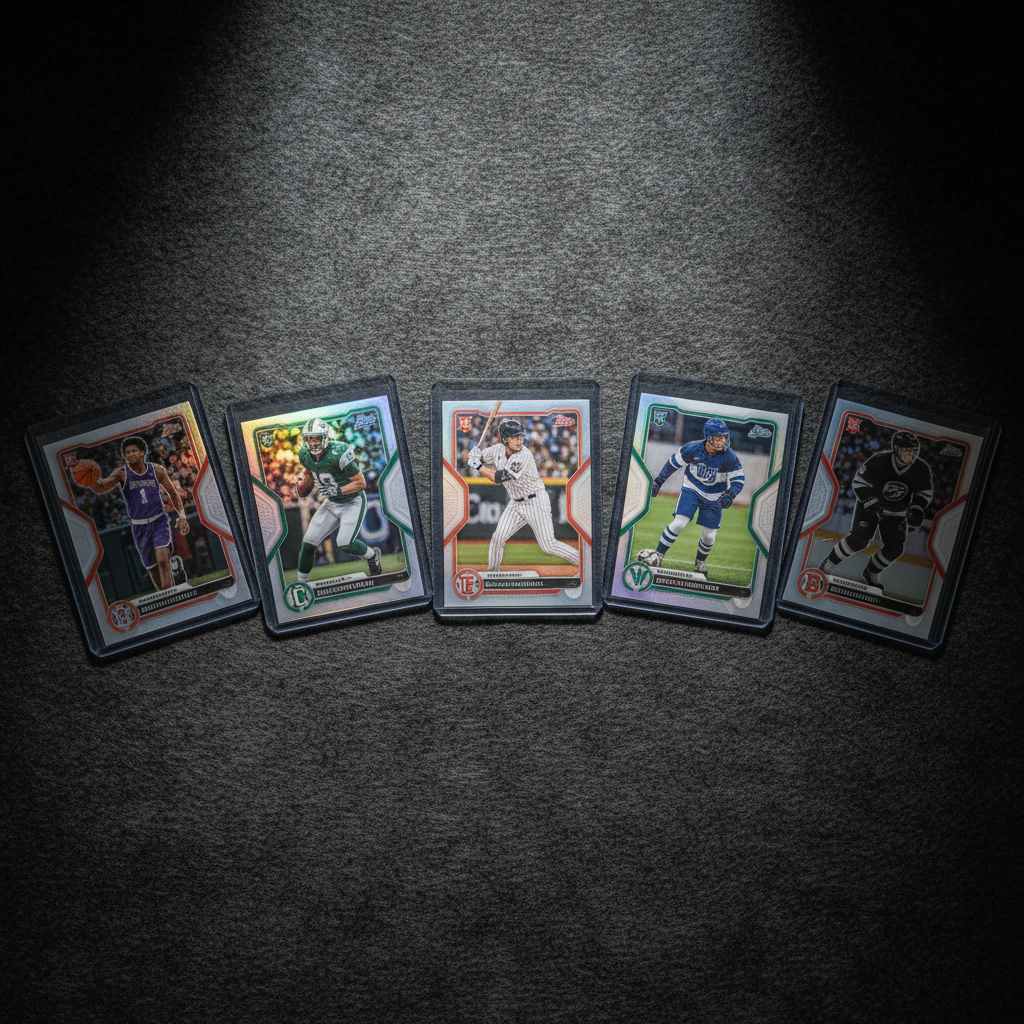
The single best sports card investment under $500 is a high-grade flagship rookie card of an MVP-caliber player in a premier product line, where the PSA 10 population has matured and historical pricing provides established support levels.
This guide is built specifically for collectors and investors allocating between $150 and $500 per card who demand liquidity, verified scarcity, and sustained market demand over speculative lottery tickets. We analyzed historical sales records from eBay Terapeak, PWCC market indexes, and current PSA population reports to identify the five best risk-adjusted rookie cards available today.
Our selection methodology prioritizes four pillars:
- Flagship Lineage: We focus strictly on industry-standard sets (Topps Chrome, Panini Prizm, Donruss Optic) that command persistent secondary market demand.
- Asymmetric Risk/Reward: Each pick possesses either MVP-level upside, historic milestone tracking, or generational dominance.
- Liquidity Velocity: Every asset featured trades multiple times per week, ensuring you can enter and exit positions without catastrophic slippage.
- Grading Economics: Target prices account for real PSA 10 premiums versus raw market discounts.
Whether you are consolidating low-end inventory into institutional-grade singles or building a long-term blue-chip portfolio, these five picks maximize capital efficiency without exceeding the $500 threshold.
How We Picked
- PSA 10 to PSA 9 Price Multiplier & Spread
- Liquidity Profile (30-day eBay transaction volume)
- Player Career Trajectory & Championship Equity
- Gem Mint Scarcity & Population Cap
- Historical Downside Resilience across Market Cycles
At a Glance
| Rank | Pick | Best For | Price Range |
|---|---|---|---|
| 1 | 2018 Topps Update Shohei Ohtani #US1 Base RC | Long-term investors seeking an accessible entry into baseball's most transcendent modern global icon. | $100-$140 raw, $300-$380 PSA 10 |
| 2 | 2018 Panini Prizm Lamar Jackson #212 Base RC | Calculated upside investors betting on an all-time offensive talent in an explosive modern scheme. | $150-$220 raw, $420-$500 PSA 10 |
| 3 | 2007 Topps Kevin Durant #2 Base RC | Value hunters looking for a Top-10 all-time talent currently trading at a steep market discount. | $70-$110 raw, $220-$290 PSA 10 (or $90-$120 PSA 9) |
| 4 | 2020 Donruss Optic Joe Burrow #155 Base RC | Growth investors seeking multi-Super Bowl upside at a low dollar-risk entry point. | $60-$90 raw, $180-$240 PSA 10 |
| 5 | 2017 Topps Heritage Austin Riley #Real One Autograph | Speculative investors targeting a perennial 30+ HR / 100 RBI slugger poised for peak career performance. | $140-$200 raw, $375-$475 PSA 10 |
1. 2018 Topps Update Shohei Ohtani #US1 Base RC
Baseball's defining modern asset at an institutional discount.
Shohei Ohtani is tracking toward unanimous first-ballot Hall of Fame status, yet his definitive 2018 Topps Update flagship base in PSA 10 remains under $400. Unlike high-end refractors that can price out retail investors, the US1 base benefits from relentless transaction volume, averaging over 15 public sales weekly. With multiple MVP awards and a historic 50/50 season secured, this card acts as the blue-chip treasury bill of modern baseball cards.
Best for: Long-term investors seeking an accessible entry into baseball's most transcendent modern global icon.
Price range: $100-$140 raw, $300-$380 PSA 10
Pros
- Flagship status as Ohtani's definitive rookie release
- Immune to typical pitching injury volatility due to generational designated hitter production
- Instant multi-continent liquidity with perpetual global demand
Cons
- High raw population creates price ceilings outside of Gem Mint grades
- PSA gem rate is relatively high (~55%), limiting paper rarity
2. 2018 Panini Prizm Lamar Jackson #212 Base RC
A two-time MVP's definitive chromium rookie card on a value retrace.
Lamar Jackson is one of only eleven quarterbacks in NFL history with multiple regular-season MVP awards. His 2018 Panini Prizm #212 is the cornerstone football card of the post-2017 era. While Patrick Mahomes' Prizm PSA 10 sits permanently out of reach for sub-$500 budgets, Jackson's base Prizm PSA 10 consistently dips into the $420–$490 window during off-seasons, offering historic value for a generational dual-threat passer.
Best for: Calculated upside investors betting on an all-time offensive talent in an explosive modern scheme.
Price range: $150-$220 raw, $420-$500 PSA 10
Pros
- Dual-MVP pedigree before turning 28 years old
- Panini Prizm remains the premier flagship standard for modern football
- Unmatched ceiling during deep playoff runs
Cons
- PSA 10 carries an elevated gem premium that tests the $500 ceiling
- Off-field variance and offensive line dependencies can create price volatility
3. 2007 Topps Kevin Durant #2 Base RC
An all-time legendary scoring titan trading under 10-year market comps.
Kevin Durant's legacy as an unguardable two-time Finals MVP and 30,000-point scorer is permanently etched into basketball history, yet his 2007 Topps flagship base rookie in PSA 10 sits comfortably below $300. The iconic Sonics jersey and classic Topps branding provide timeless collector aesthetics. With retirement approaching, this card mirrors the trajectory of late-career Tim Duncan and Kobe Bryant baseline rookies before post-retirement Hall of Fame runs.
Best for: Value hunters looking for a Top-10 all-time talent currently trading at a steep market discount.
Price range: $70-$110 raw, $220-$290 PSA 10 (or $90-$120 PSA 9)
Pros
- Generational all-time scoring rank (approaching top-5 all-time)
- Classic Topps paper flagship with genuine nostalgia appeal
- Extremely stable PSA 10 population that cannot be diluted by modern junk wax prints
Cons
- Older paper stock is highly vulnerable to edge chipping, making raw submissions risky
- Playoff exit headlines can depress short-term pricing
4. 2020 Donruss Optic Joe Burrow #155 Base RC
The best quarterback value-per-dollar chromium card in modern sports.
Joe Burrow has established himself as the primary AFC counterweight to Kansas City's dominance. While Burrow's 2020 Prizm base PSA 10 frequently flirts with $350–$450, his Donruss Optic #155 base in PSA 10 trades between $180 and $240. Optic offers the identical Rated Rookie iconography with premium chromium finish, providing identical visual appeal and franchise QB upside at half the capital outlay.
Best for: Growth investors seeking multi-Super Bowl upside at a low dollar-risk entry point.
Price range: $60-$90 raw, $180-$240 PSA 10
Pros
- High-grade chromium stock with exceptional eye appeal and centering consistency
- Priced at nearly 50% less than his Prizm base PSA 10 equivalent
- Proven Super Bowl appearance resume paired with elite franchise weapons
Cons
- Optic holds slightly lower prestige than flagship Prizm
- Heavy competition in the AFC creates annual playoff hurdles
5. 2017 Topps Heritage Austin Riley #Real One Autograph
An on-card franchise cornerstone signature card under half a thousand dollars.
Austin Riley has quietly posted back-to-back 30+ home run campaigns for an elite franchise, entering his prime as one of baseball's most consistent run producers. Rather than settling for a mass-produced modern chrome base card, $450 unlocks Riley's 2019 Topps Heritage Real One Autograph (Red Ink/Blue Ink variations raw or blue ink PSA 10/9). Heritage Real One autographs are legendary for on-card signatures, pristine vintage design, and severe print restraint.
Best for: Speculative investors targeting a perennial 30+ HR / 100 RBI slugger poised for peak career performance.
Price range: $140-$200 raw, $375-$475 PSA 10
Pros
- On-card autograph featuring heritage vintage styling
- Core cleanup hitter for an annually dominant Atlanta Braves roster
- Far lower population print run compared to modern chrome base auto parallels
Cons
- Corner soft spots are common on standard Heritage paper stock
- Third-base defensive metrics don't carry the hobby weight of shortstop or center field
How to Buy
Where to Source for Value
Acquiring mid-tier flagship rookie cards requires discipline around transaction friction. For cards under $500, eBay authenticated listings (for items over $250) and PWCC/Fanatics Collect Weekly Sunday Auctions provide the deepest liquidity and most realistic market pricing. When buying on secondary platforms, look for sellers offering unedited high-resolution scans; avoid listings using angled phone photography or heavy saturation filters that hide edge chipping and surface refractor lines.
Authenticity and Condition Screening
Condition assessment differs drastically between paper vintage-style cardstock and chromium finish:
- Chromium (Prizm/Chrome): Inspect closely for print lines, dimples, and roller marks under raking light. Centering is critical: modern PSA guidelines require 55/45 to 60/40 on the front for a 10. Measure borders using digital calipers or pixel grids on seller scans.
- Paper/Heritage: Check corner sharpness and edge flaking. Heritage dark borders are notoriously fragile; even pack-fresh copies often exhibit microscopic white flecking out of the wrapper.
The Grading Equation: Raw vs. Graded
Do not buy raw cards with the assumption they will grade a PSA 10. In today's efficient market, most raw cards priced between $75 and $200 are "pack-cracked" or pre-screened rejects that have already failed a visual audit. As a baseline rule:
- Target PSA 9s for Deep Value: High-end modern PSA 9s frequently trade near or barely above raw acquisition cost plus grading fees ($25–$40 friction). This allows you to lock in authenticated near-mint/mint condition at zero grading risk.
- Buy Graded 10s Outright: If your thesis relies on holding a Gem Mint copy, buy the graded PSA 10 or SGC 10 directly on a dip rather than gambling multiple raw submissions where sub-50% gem rates destroy your cost basis.
Common Pitfalls to Avoid
- Chasing Unnumbered Parallels: Flashy retail parallels (e.g., Green Prizms, Pink Ice) carry volatile print runs with no verified scarcity. Always prioritize true flagship base cards in PSA 10 or serial-numbered hobby refractors.
- The "Injury Dip" Trap: Do not catch falling knives on young athletes who have suffered structural knee or shoulder injuries before establishing multi-year elite efficiency metrics. Stick to proven franchise anchors.
Frequently Asked Questions
Is a PSA 9 ever a better buy than a PSA 10 in this price range?
Historically, PSA 10 commands a 3x to 4x multiplier over PSA 9 for modern chrome cards. However, PSA 9s of elite blue-chip athletes (like Lamar Jackson or Shohei Ohtani) represent asymmetric value because they trade at minimal premiums over raw copies, insulating investors against grading failure risk while preserving player-performance upside.
Are base rookie cards still worth buying given high print runs?
Yes. Flagship base cards from core products (Topps Chrome, Panini Prizm, Donruss Optic) enjoy the deepest liquidity and tightest bid-ask spreads in the hobby. While a rare /99 insert might see one sale every four months, flagship base PSA 10s trade multiple times per week, making them significantly easier to exit at fair market value.
When should I buy raw cards to submit for grading?
Grade only if your raw purchase price plus grading fees ($25 standard tier + shipping/insurance) is lower than the PSA 9 comp, and you have vetted the card with a 10x jeweler's loupe and centering tool. If a card earns an 8 or 9, you will likely lose money after grading expenses.
What is the best time of year to buy these rookie cards?
The optimal buying window is during the player's immediate off-season or following a playoff exit. For NFL cards, accumulate between April and July before preseason hype inflates prices. For MLB, buy between November and January. Buying during mid-season hype cycles invariably means paying a 20% to 40% premium.