The 5 Best Hidden Gem Players to Invest in Before the Hype
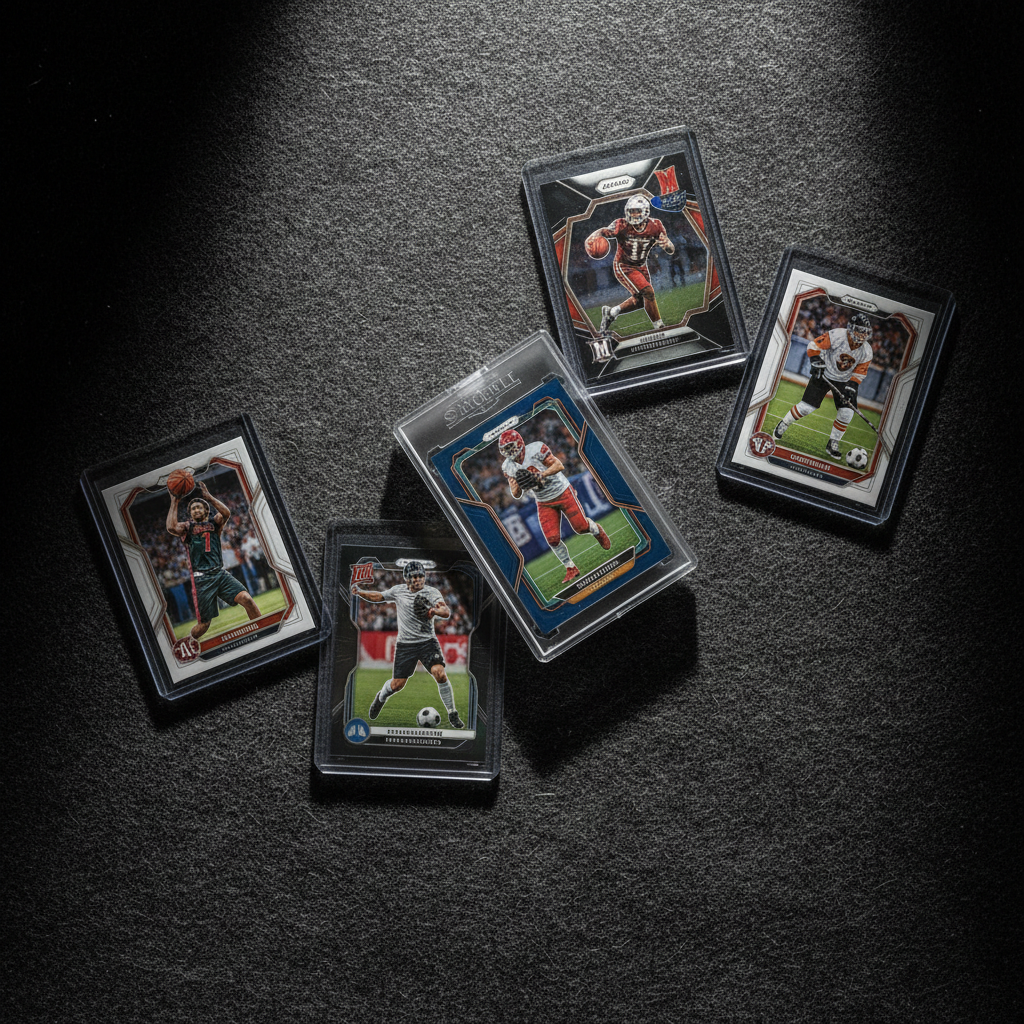
The savviest sports card investors buy assets, not lottery tickets. This guide is for them. We identify elite players whose card markets are lagging their on-field performance and potential. Our methodology is simple: find transcendent talent, identify their key benchmark rookie card, verify market undervaluation using sales and population data, and target PSA 10 grades that offer the best combination of scarcity and liquidity. The single best investment you can make is buying a future superstar's key rookie card before the rest of the market realizes they are a superstar. This guide gives you five such opportunities.
How We Picked
- Player Talent Ceiling
- Current Market Undervaluation
- Benchmark Card Scarcity
- Team & Market Narrative
- Long-Term ROI Potential
At a Glance
| Rank | Pick | Best For | Price Range |
|---|---|---|---|
| 1 | Jalen Williams 2022-23 Panini Prizm Silver #247 | The investor who wants a high-floor, high-upside play on a future All-NBA talent. | $100-$150 raw, $300-$450 PSA 10 |
| 2 | Jordan Love 2020 Panini Optic Holo #154 | The investor who believes in buying franchise QBs during moments of temporary market doubt. | $70-$100 raw, $250-$400 PSA 10 |
| 3 | Bobby Witt Jr. 2022 Topps Chrome Sapphire Edition #36 | The blue-chip investor looking to own a cornerstone player's premium rookie card at a discount. | $40-$60 raw, $200-$300 PSA 10 |
| 4 | Jack Hughes 2019-20 Upper Deck Young Guns #201 | The investor with a higher risk tolerance who wants to bet on pure, unadulterated talent. | $80-$120 raw, $250-$375 PSA 10 |
| 5 | Oscar Piastri 2022 Topps Chrome F1 Sapphire Edition #15 | The globally-minded investor looking to get ahead of the curve in the fastest-growing segment of the hobby. | $100-$150 raw, $300-$500 PSA 10 |
1. Jalen Williams 2022-23 Panini Prizm Silver #247
The market's most undervalued future All-Star.
Jalen Williams (J-Dub) has established himself as the clear #2 option on a legitimate championship contender, yet his card market prices him like a role player. His Prizm Silver rookie, the iconic benchmark, trades at a fraction of comparable players from prior drafts. With a PSA 10 population under 2,500, it's far scarcer than the market realizes, offering a rare entry point before he becomes a household name.
Best for: The investor who wants a high-floor, high-upside play on a future All-NBA talent.
Price range: $100-$150 raw, $300-$450 PSA 10
Pros
- Playing alongside an MVP candidate (SGA) guarantees high-leverage games.
- Clear second option on a top-tier team.
- Considered an 'old' rookie, which artificially depressed initial interest.
Cons
- Not the primary star on his team.
- Prizm print runs are always a concern, though the Silver holds up.
2. Jordan Love 2020 Panini Optic Holo #154
The heir apparent in Green Bay is still discounted.
After sitting for three years, Jordan Love proved he has the talent to lead the Packers. His Optic Holo rookie card, from a set beloved by collectors, is the key non-Prizm card to own. The post-hype boom from his 2023 season has cooled, creating a perfect buying window before the 2024 season cements his status. His prices are still closer to Daniel Jones than to top-tier QBs, a market inefficiency waiting to be corrected.
Best for: The investor who believes in buying franchise QBs during moments of temporary market doubt.
Price range: $70-$100 raw, $250-$400 PSA 10
Pros
- Franchise QB for one of the hobby's most collected teams.
- Three years of development created a depressed supply; many raw cards were discarded or sold cheap.
- Showed elite potential in the second half of the 2023 season.
Cons
- Only one year of starting data to go on.
- Plays in the shadow of Aaron Rodgers and Brett Favre.
3. Bobby Witt Jr. 2022 Topps Chrome Sapphire Edition #36
A 5-tool superstar shackled only by his team's market.
Bobby Witt Jr. is a legitimate 30-homer, 50-steal threat, a statistical profile that screams hobby superstar. His Topps Chrome Sapphire rookie offers a more limited, premium alternative to the base versions, with a much lower PSA 10 population. The Kansas City market has suppressed his prices, meaning you can acquire a flagship rookie of a future MVP candidate for the price of a mid-level player on the Yankees or Dodgers.
Best for: The blue-chip investor looking to own a cornerstone player's premium rookie card at a discount.
Price range: $40-$60 raw, $200-$300 PSA 10
Pros
- Locked into a long-term contract, ensuring stability.
- Rare power/speed combination that collectors covet.
- Sapphire brand is a proven winner for long-term holds.
Cons
- Small market team limits national media exposure.
- His standard Topps Chrome card has a massive print run.
4. Jack Hughes 2019-20 Upper Deck Young Guns #201
Buy the dip on a generational talent's key rookie.
In hockey, there is one rookie card that matters above all: the Young Guns. Jack Hughes, when healthy, is a top-5 offensive talent in the entire league. A string of injuries and team struggles created a significant dip in his card prices from their peak. This is a classic 'buy the injury' play on a player whose talent is undeniable. His Young Guns PSA 10 is liquid, iconic, and currently trading far below its eventual ceiling.
Best for: The investor with a higher risk tolerance who wants to bet on pure, unadulterated talent.
Price range: $80-$120 raw, $250-$375 PSA 10
Pros
- It is THE iconic rookie card for a #1 overall pick.
- Proven point-per-game-plus player.
- Market has cooled significantly, offering a prime entry point.
Cons
- Injury history is a legitimate concern.
- New Jersey is a solid, but not huge, hockey market.
5. Oscar Piastri 2022 Topps Chrome F1 Sapphire Edition #15
The most undervalued future champion in Formula 1.
Oscar Piastri is a generational prospect, winning F3, F2, and scoring multiple F1 podiums in his rookie season. However, his key card is the 2022 Topps Chrome Sapphire from his F2 days, creating confusion for new investors. This card is significantly scarcer than the forthcoming cards from his F1 career will be. With the F1 hobby exploding, securing Piastri's best card before he's truly competing for a World Championship with McLaren is a shrewd move.
Best for: The globally-minded investor looking to get ahead of the curve in the fastest-growing segment of the hobby.
Price range: $100-$150 raw, $300-$500 PSA 10
Pros
- Considered one of the best junior careers ever.
- Drives for a top team (McLaren) with a massive global fanbase.
- Sapphire edition provides scarcity in a market that will soon be flooded with base cards.
Cons
- F1 market is notoriously volatile.
- His teammate, Lando Norris, is currently the team's main star.
- This is his F2 card, not an F1 rookie-branded card.
How to Buy
'''
How to Buy: An Investor's Checklist
1. Target Grade-First, Buy Graded: For modern cards (2018+), the economics of grading rarely favor the buyer. Printing technology is so good that much of the print run is Gem Mint. Don't buy a raw card hoping for a PSA 10; buy the PSA 10 directly. Use the listed price ranges as a guide. If a deal on a raw card seems too good to be true, it is—it won't grade a 10.
2. Master eBay: The majority of secondary market volume happens on eBay. Use a price-tracking tool like 130point.com to view actual "sold" prices, not just "list" prices. Focus on auctions from high-reputation sellers to gauge the true market value. Use saved searches and be patient; don't overpay because of FOMO.
3. The Off-Season is Your Friend: The best time to buy football cards is June. The best time to buy basketball cards is August. Buying during the off-season, after the hype of a playoff run has died down, is the single most effective timing strategy. The picks in this guide have been selected because they have strong year-round value, but a 10-20% discount can often be found by simply buying when no one else is paying attention.
4. Authenticity & Scams: Only buy graded cards where you can verify the certification number on the grader's website (e.g., PSA, BGS, SGC). Look at the photos carefully. Are there cracks in the case? Is the card moving around loosely? Common scams involve fake or tampered slabs. Deal only with sellers who have a long history of positive feedback for sports card sales.
5. Portfolio Allocation: Don't go all-in on one player or card. A smart investor might allocate 50% of their budget to a high-floor pick like Jalen Williams, 30% to a high-upside QB like Jordan Love, and 20% to a global growth play like Oscar Piastri. Diversification lessens risk and increases your chances of holding a major gainer. '''
Frequently Asked Questions
Why aren't players like Victor Wembanyama or C.J. Stroud on this list?
Because they are not 'hidden gems.' Their cards are priced at the absolute peak of market hype, representing maximum risk. This guide is about finding value before the market explodes, not chasing it after the fact.
Is a PSA 10 grade really worth that much more?
Yes. For modern cards, a PSA 10 Gem Mint grade is the standard for investment-grade assets. A PSA 9 is a fine collectible, but it often sells for only 50-60% of a PSA 10's value, and its price is far less stable. The premium for the 'perfect' card is significant and grows over time.
What is the biggest mistake new sports card investors make?
Chasing hype and buying players at their absolute peak. The second biggest mistake is buying ungraded cards with the hope they will gem, a process that usually ends in disappointment and financial loss. Be patient and buy the graded card.
Should I sell if one of these players doubles in price?
That depends on your investment strategy. A reasonable approach is to sell enough to recoup your initial investment, letting you enjoy the rest of the ride 'for free.' However, all of these picks were chosen for their long-term potential to become signature assets of their era.