The Best 5 Hidden Gem Sports Cards to Buy Before The Hype (2024)
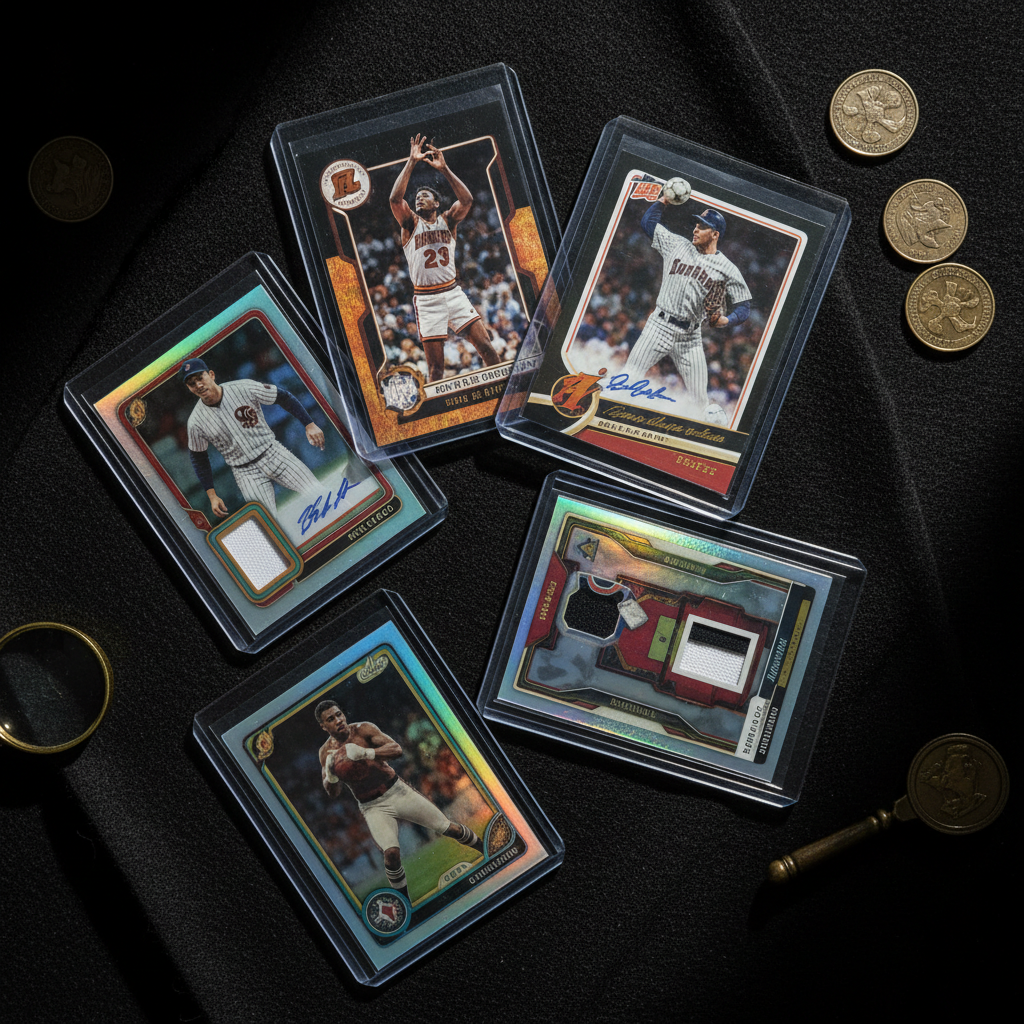
The single best way to get ahead in the modern sports card market is to buy talent before the rest of the hobby catches on. This guide is for serious collectors who are willing to make a data-driven bet against consensus. We are not picking long-shot prospects; we are identifying established, elite players whose card markets are lagging behind their on-field performance and long-term potential. Our methodology focuses on players who have already shown flashes of brilliance or sustained excellence but are temporarily overlooked due to team dynamics, market saturation, or a simple lack of narrative. We analyzed PSA population reports, recent sales data from eBay, and player performance metrics to find five specific, actionable cards that represent the best value in the market right now.
How We Picked
- Player Ceiling
- Card Scarcity (PSA Pop)
- Market Value vs. Performance
- Team Trajectory
- Ease of Liquidity
At a Glance
| Rank | Pick | Best For | Price Range |
|---|---|---|---|
| 1 | 2020 Panini Prizm #258 Anthony Edwards (Silver Prizm) | The investor who wants a blue-chip talent at a temporary discount. | $450-$600 raw, $900-$1,400 PSA 10 |
| 2 | 2019 Bowman Chrome Draft #BDC-1 Adley Rutschman (1st Bowman) | The patient baseball collector who trusts talent and team trajectory over hype. | $30-$50 raw, $150-$250 PSA 10 |
| 3 | 2023 Panini Prizm #339 C.J. Stroud (Silver Prizm) | The investor looking for a short-to-medium term flip on a proven football star. | $400-$550 raw, $800-$1,200 PSA 10 |
| 4 | 2020-21 Topps Chrome UEFA Champions League #65 Cole Palmer (Refractor) | The investor who prioritizes extreme scarcity and is willing to bet on high-ceiling soccer talent. | $250-$400 raw, $1,500-$2,500+ PSA 10 |
| 5 | 2015-16 Upper Deck #201 Jack Eichel (Young Guns) | The hockey collector looking for a contrarian play on a proven winner. | $50-$80 raw, $200-$325 PSA 10 |
1. 2020 Panini Prizm #258 Anthony Edwards (Silver Prizm)
The Superstar Hiding in Plain Sight
Anthony Edwards is already a household name, but his card market is stubbornly undervalued relative to his trajectory. He is the undisputed leader of a franchise on the rise and possesses a media-friendly charisma that the hobby loves. While the PSA 10 population for his Silver Prizm is high, it's a true benchmark rookie card that will be in perpetual demand; a rising tide of stardom will lift all ships, and this is his flagship.
Best for: The investor who wants a blue-chip talent at a temporary discount.
Price range: $450-$600 raw, $900-$1,400 PSA 10
Pros
- Face of a rising franchise with elite talent and charisma.
- The quintessential modern basketball rookie card (Prizm Silver).
- Prices are currently soft compared to his actual ceiling.
Cons
- High PSA population means you need a PSA 10 for maximum value.
- Not a true "unknown," so the buy-low window could close fast.
2. 2019 Bowman Chrome Draft #BDC-1 Adley Rutschman (1st Bowman)
The Generational Catcher Getting Overlooked
Adley Rutschman is the best catcher in baseball and the field general for the league's most exciting young team. The hobby has historically undervalued catchers, creating a market inefficiency. His 1st Bowman card, the key pre-rookie card for any modern baseball player, is trading at a significant discount to his less-accomplished teammate Gunnar Henderson's cards—an arbitrage opportunity on the same roster.
Best for: The patient baseball collector who trusts talent and team trajectory over hype.
Price range: $30-$50 raw, $150-$250 PSA 10
Pros
- Best player at his position on a dominant team.
- 1st Bowman Chrome is a collecting institution with long-term stability.
- Undervalued due to the historical bias against catchers.
Cons
- Team success is critical for his market to pop.
- Baseball card market can be slower moving than basketball or football.
3. 2023 Panini Prizm #339 C.J. Stroud (Silver Prizm)
The Obvious Play During the Off-Season Lull
The market has a short memory. After a record-setting rookie campaign, C.J. Stroud's card prices have dipped 20-30% from their in-season peak as the hobby chases the new rookie class. This is a classic buy-the-dip opportunity on a player who has already proven he is an elite NFL quarterback. The Prizm Silver is his key rookie card, and this off-season window is the last chance to get it at a reasonable price.
Best for: The investor looking for a short-to-medium term flip on a proven football star.
Price range: $400-$550 raw, $800-$1,200 PSA 10
Pros
- Already proved he is a top-tier NFL QB.
- Current prices are 20-30% off their recent peak, offering a clear entry point.
- The most liquid and recognized rookie card for the 2023 class.
Cons
- Needs to avoid a sophomore slump for prices to rebound.
- High print run means only PSA 10s will hold significant long-term value.
4. 2020-21 Topps Chrome UEFA Champions League #65 Cole Palmer (Refractor)
The Breakout Star Whose Cards Haven't Caught Up
Cole Palmer just won Premier League Young Player of the Season after a phenomenal year with Chelsea. However, his key rookie cards are from his time at Manchester City, where he played sparingly. This has created a massive scarcity advantage. His 2020-21 Topps Chrome Refractor has a PSA 10 population of less than 100, but he's now priced like a prospect, not the proven star he is. This is a pure data-driven play on a player whose market has not reconciled with his on-pitch reality.
Best for: The investor who prioritizes extreme scarcity and is willing to bet on high-ceiling soccer talent.
Price range: $250-$400 raw, $1,500-$2,500+ PSA 10
Pros
- Extremely low population rookie card of a now-proven Premier League star.
- Plays for a massive club (Chelsea) and national team (England).
- Price is lagging far behind his actual performance and status.
Cons
- Soccer market can be volatile.
- Needs to replicate his success to sustain price growth.
5. 2015-16 Upper Deck #201 Jack Eichel (Young Guns)
The Champion Who Hasn't Shaken His Past
The card market still associates Jack Eichel with his messy exit from Buffalo, not his current status as a Stanley Cup-winning #1 center in Las Vegas. His Young Guns card—the most important hockey rookie—is priced at a steep discount compared to other elite players from his draft class. He has the ring and the role; the market correction is a matter of when, not if.
Best for: The hockey collector looking for a contrarian play on a proven winner.
Price range: $50-$80 raw, $200-$325 PSA 10
Pros
- Stanley Cup champion and star player on a major market team.
- Young Guns is hockey's most iconic and liquid rookie card set.
- Clear price disparity between his card value and his on-ice accomplishments.
Cons
- Hockey has a smaller collector base than the other major sports.
- The
How to Buy
'''### How to Buy Hidden Gems Intelligently
Finding the right card is only half the battle. Buying it correctly is where you secure your profit.
1. Where to Source:
- eBay: The primary marketplace. Use eBay sold listings to establish your target price. Look for sellers with high feedback scores. For raw cards, scrutinize photos for corner and surface condition.
- MySlabs: A growing platform with lower fees than eBay, often meaning slightly better prices for both buyers and sellers. Best for graded cards.
- COMC (Check Out My Cards): Excellent for sourcing raw cards, especially if you plan to submit them for grading. You can buy cards and have them sent directly to PSA, saving time and shipping costs.
2. Raw vs. Graded:
- Buying Raw: Offers the highest upside but carries the most risk. A raw card that looks perfect could have a hidden surface flaw that earns it a PSA 8 instead of a 10, drastically altering its value. Only buy raw if you are confident in your ability to "pre-grade" a card yourself or if the price is low enough to justify the risk.
- Buying Graded: A PSA, BGS, or SGC 9 or 10 is a known quantity. You are buying the grade, not the card. It's the safer play, especially for cards over $500. For our picks, the economics strongly favor buying PSA 10s for modern cards (Stroud, Edwards) and considering high-grade raw for pre-rookie cards (Rutschman).
3. Common Pitfalls to Avoid:
- FOMO (Fear Of Missing Out): Don't chase a card after a huge performance. The biggest gains are made by buying during the off-season or during a slump. Let the market come to you.
- Ignoring Shipping and Taxes: Factor in shipping costs and sales tax when calculating your all-in price. A $1000 card can easily become a $1120 card, impacting your potential ROI.
- Misjudging Centering: This is the most common flaw on modern cards. A card that is 60/40 centered or worse is unlikely to get a PSA 10, even if the corners and surface are perfect. Use a centering tool or app if you are unsure. '''
Frequently Asked Questions
Why are "1st Bowman" cards so important in baseball?
A player's 1st Bowman card is their first official card in a pro uniform, often released years before their official MLB 'Rookie Card'. This scarcity and historical significance make it the most coveted and valuable pre-rookie card for modern players.
Is it better to buy a raw card and grade it myself or just buy a graded PSA 10?
For modern cards with high print runs (like Prizm Silvers), it is often more cost-effective to buy a PSA 10 outright. The cost of grading ($25-$50), shipping, and the risk of not getting a 10 often make "cracking and submitting" a losing proposition unless you can acquire the raw card well below market value.
How much does a player winning a championship affect their card prices?
A championship is one of the most significant catalysts for a price increase, often legitimizing a player and bringing in new buyers. For undervalued players like Jack Eichel, who have already won, the market is presenting a lag that savvy collectors can exploit before his prices align with his new status as a champion.
Why focus on Silver Prizms and not other parallels?
The Silver Prizm is the iconic, non-numbered parallel that is considered the benchmark rookie for modern basketball and football. While numbered parallels are scarcer, the Silver is more liquid and has a broader base of collectors, making it a more stable and recognizable long-term investment.