The 5 Best Modern Parallels Worth Chasing: A Buyer's Guide
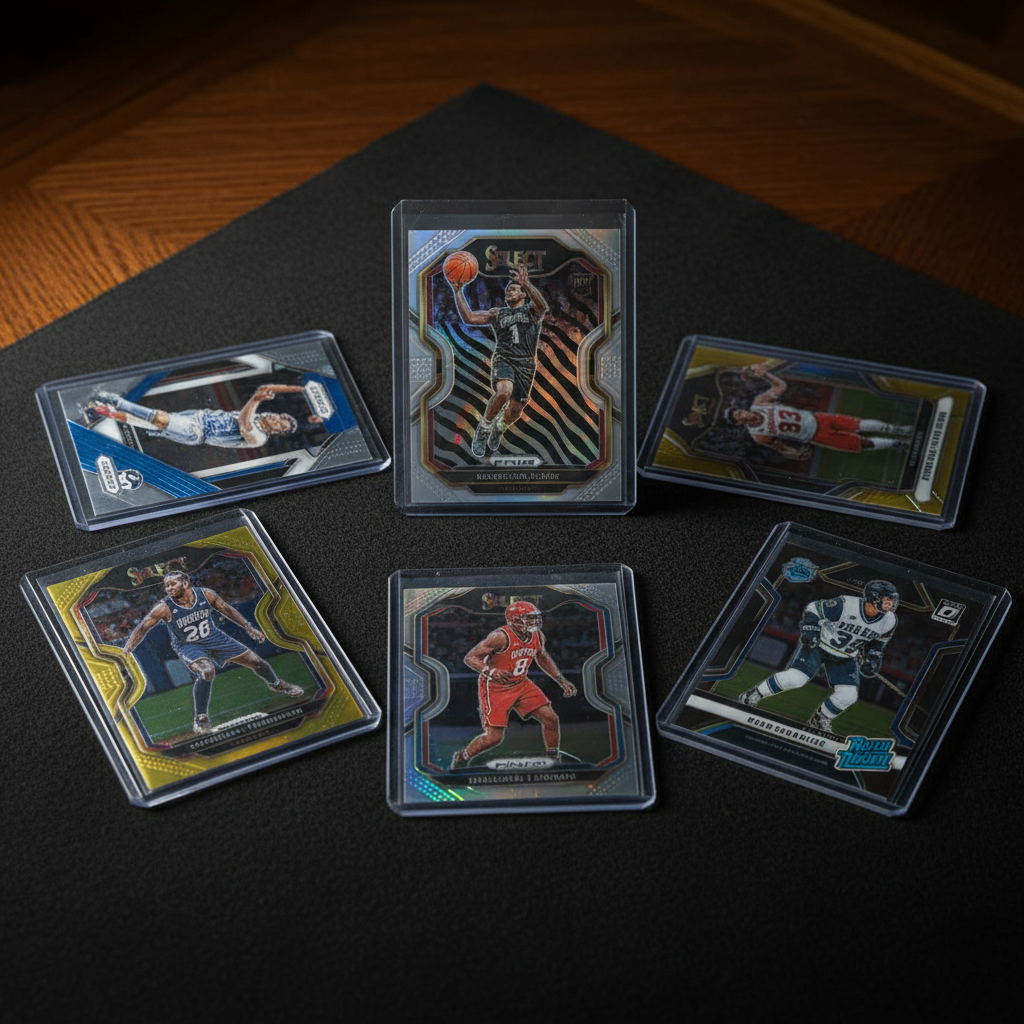
The single best modern parallel for collectors to own is the Topps Chrome Gold Refractor. This guide is for serious collectors and investors looking to move beyond base cards and into the world of modern parallels—specifically, those with a proven track record of value retention and growth. We analyzed dozens of iconic parallel sets from the last 25 years, focusing on criteria like brand heritage, relative scarcity, collector demand, and long-term price performance. Our methodology involved scrutinizing PSA population reports, tracking six months of eBay sales data, and calculating the true cost of grading to identify cards that offer the best investment potential in the $200-$5000 range. These five cards represent the pinnacle of modern parallel collecting, offering a blend of rarity, aesthetics, and liquidity that sets them apart from the sea of manufactured scarcity.
How We Picked
- Brand Heritage & Collector Trust
- Relative Scarcity (Print Run & Pop Count)
- Player Importance & Ceiling
- Aesthetic Appeal &
At a Glance
| Rank | Pick | Best For | Price Range |
|---|---|---|---|
| 1 | 2018 Topps Chrome Update Shohei Ohtani Gold Refractor #HMT1 | The investor-collector who wants a proven, blue-chip modern card with a high ceiling. | $4,000-$6,000 raw; PSA 10 could fetch $20,000+ |
| 2 | 2017 Panini Prizm Patrick Mahomes Gold Vinyl Prizm #267 | The high-end investor seeking the absolute rarest version of a player's key rookie card. | PSA 9 sold for over $200,000. Raw copies are virtually non-existent on the open market. |
| 3 | 2005 Topps Chrome LeBron James Black Refractor #155 | The collector who wants a top-tier parallel of an all-time great without paying the ultimate rookie premium. | $1,000-$1,800 raw; $4,000-$6,000+ in a PSA 10. |
| 4 | 2019 Topps Chrome Fernando Tatis Jr. Sapphire Edition #70 | The discerning collector who values aesthetics and condition scarcity as much as serial numbering. | $200-$350 raw; $800-$1,200 in a PSA 10. |
| 5 | 2018 Panini Select Luka Dončić Zebra Prizm #22 | The modern basketball enthusiast who enjoys the thrill of the SSP hunt. | $1,500-$2,500 raw (Courtside); $7,000-$10,000+ in a PSA 10. |
1. 2018 Topps Chrome Update Shohei Ohtani Gold Refractor #HMT1
The Modern Gold Standard.
Combining the most iconic brand (Topps Chrome), the most important parallel color (Gold), and a generational talent (Ohtani), this card is a blue-chip asset. Gold Refractors are legendary, historically scarce (numbered to /50), and command a massive premium. The PSA 10 population is exceptionally low for a modern icon, ensuring its long-term value.
Best for: The investor-collector who wants a proven, blue-chip modern card with a high ceiling.
Price range: $4,000-$6,000 raw; PSA 10 could fetch $20,000+
Pros
- Iconic Topps Gold parallel with 25+ years of history.
- Features a two-way global superstar in his rookie year set.
- Extremely low PSA 10 population (under 20) relative to print run.
Cons
- High cost of entry, even for raw copies.
- Update series can be less desirable than flagship Series 1/2 for some purists.
2. 2017 Panini Prizm Patrick Mahomes Gold Vinyl Prizm #267
The Pinnacle of Modern Football Parallels.
While the hobby often favors Topps, Panini's Gold Vinyl Prizm (numbered to /5) is the undisputed king of modern football parallels. For the most important quarterback of his generation, this card's rarity is almost mythical. Its price appreciation has been astronomical, and with a minuscule pop count across all grades, any copy that surfaces is a market-mover.
Best for: The high-end investor seeking the absolute rarest version of a player's key rookie card.
Price range: PSA 9 sold for over $200,000. Raw copies are virtually non-existent on the open market.
Pros
- Top-tier quarterback on a Hall of Fame trajectory.
- The rarest, most coveted Panini Prizm parallel (/5).
- Exceptional value retention and growth.
Cons
- Extremely difficult to find and prohibitively expensive.
- Panini brand lacks the multi-generational history of Topps.
3. 2005 Topps Chrome LeBron James Black Refractor #155
A Legendary Parallel for a Living Legend.
Black Refractors are a collector favorite, and this third-year LeBron card from the golden era of Topps Chrome is a perfect example. Numbered to /500, it offers a more accessible entry point into high-end LeBron collecting than his rookie cards but still boasts significant scarcity. The striking black border makes it condition-sensitive, keeping the PSA 10 population respectably low and fueling its long-term value.
Best for: The collector who wants a top-tier parallel of an all-time great without paying the ultimate rookie premium.
Price range: $1,000-$1,800 raw; $4,000-$6,000+ in a PSA 10.
Pros
- Features an all-time great player.
- Iconic and aesthetically pleasing Black Refractor design.
- Relatively affordable compared to his rookie parallels.
Cons
- Third-year card, not a rookie.
- The /500 print run is higher than other top-tier parallels on this list.
4. 2019 Topps Chrome Fernando Tatis Jr. Sapphire Edition #70
The Ultimate 'Chaser's' Parallel.
The Sapphire Edition, with its unique crackled ice design and limited distribution, has quickly become a modern grail. The Tatis Jr. rookie is the key card in the 2019 set, a product known for its brutal collation and centering issues. This makes high-grade examples incredibly tough to acquire, and the PSA 10 commands a significant premium over the already popular base Topps Chrome version.
Best for: The discerning collector who values aesthetics and condition scarcity as much as serial numbering.
Price range: $200-$350 raw; $800-$1,200 in a PSA 10.
Pros
- Unique and highly attractive design.
- Part of a now-iconic and limited 'online exclusive' product line.
- Difficult to grade, protecting the value of high-grade copies.
Cons
- Player performance and off-field issues add a layer of risk.
- Not serial numbered, leading some to question its true scarcity.
5. 2018 Panini Select Luka Dončić Zebra Prizm #22
The Modern SSP King.
Before the explosion of case-hit animal prints, the Zebra Prizm stood out. As a super short print (SSP) with no serial number, it carries a mystique and has become one of Luka's most coveted non-numbered rookie parallels. Found across the three tiers of Select (Concourse, Premier, Courtside), the Courtside version is the most desirable, but any Zebra is a significant find. It has held its value remarkably well against a flood of newer, shinier parallels.
Best for: The modern basketball enthusiast who enjoys the thrill of the SSP hunt.
Price range: $1,500-$2,500 raw (Courtside); $7,000-$10,000+ in a PSA 10.
Pros
- Key rookie card of an international NBA superstar.
- One of the original and most respected SSP case hits.
- Strong collector demand and brand recognition.
Cons
- Lack of serial number can be a turn-off for some investors.
- The multiple tiers of Select can create confusion for new buyers.
How to Buy
'''
How to Buy Modern Parallels: A Tactical Guide
Investing in high-end parallels requires a different approach than ripping wax or buying base rookies. Follow these steps to protect your capital and make smarter acquisitions.
1. Where to Source High-End Parallels:
- eBay: The primary marketplace. Use saved searches and be patient. For cards over $1,000, look for sellers with extensive feedback (1,000+) and a history of selling similar cards. Always use eBay's authenticity guarantee service when available.
- MySlabs: A fixed-price marketplace popular with experienced collectors. Fees are lower than eBay, often resulting in slightly better prices. The platform is less forgiving for inexperienced buyers, so know your stuff.
- Goldin & PWCC: Premier auction houses for top-tier, graded cards. Best for acquiring PSA 10s or ultra-rare vinyls, but be prepared for a 20% buyer's premium.
2. Raw vs. Graded: The Economic Calculation
For modern parallels, grading is almost always the right move. The value gap between a raw card and a PSA 10 is immense. However, don't assume every raw card is a potential gem.
- The Grader's Eye: Before buying raw, get a 10x jeweler's loupe. Scrutinize corners for white specks, edges for chipping (especially on colored borders like Black Refractors), and the surface for print lines or scratches. Most importantly, check the centering. Use a ruler or centering tool; a card that is 60/40 or worse will not get a PSA 10.
- The Cost-Benefit: A raw 2019 Tatis Sapphire might cost $300. Grading costs roughly $25 (plus shipping/insurance). A PSA 9 sells for $450, and a PSA 10 sells for $1,000. If you're confident it's a 9 or 10, the risk is justified. If it comes back an 8 ($200 value), you've lost money. Only buy raw if you are confident in your assessment.
3. Common Pitfalls to Avoid:
- Ignoring Population Reports: Don't just look at the print run (
/50). Look at the PSA population report. If a card numbered to /50 has 30 PSA 10s, it's far less scarce than a card numbered to /500 with only 5 PSA 10s. Condition sensitivity is a major value driver. - Falling for Hype: New, flashy parallels are released every month (e.g., "Snakeskin," "Cracked Ice," "Photon"). Stick with the proven winners: Gold, Black, and key SSPs from flagship brands like Prizm and Topps Chrome. Let others speculate on the flavor of the month.
- Overlooking Authenticity: For non-numbered SSPs like the Zebra Prizm, fakes can be an issue. Compare the foil pattern and texture to graded examples online. If a deal seems too good to be true, it almost certainly is. '''
Frequently Asked Questions
What is the difference between a refractor and a prizm?
Functionally, they are the same concept—a parallel card that uses a reflective, rainbow-like foil finish. 'Refractor' is the trademarked term used by Topps, originating in the 1990s. 'Prizm' is the term Panini uses for its equivalent cards, introduced in 2012. Collectors generally consider Refractors to have a longer and more prestigious history.
Why are Gold parallels so expensive?
Gold parallels, whether Topps Gold (/50) or Panini Gold (/10), have become the industry standard for rare and desirable cards. The color is universally associated with victory and prestige. Brands have been consistent with the color and relative scarcity for decades, building a long-term track record of collector trust and value retention that newer parallels haven't earned.
Is it better to buy a PSA 10 or a BGS 9.5?
For modern cards, a PSA 10 Gem Mint is almost always more valuable and liquid than a BGS 9.5 Gem Mint. The exception is a 'Pristine' BGS 10 or a 'Black Label' BGS 10, which are exceptionally rare and command a significant premium over a PSA 10. For most transactions, PSA is the preferred grading service for maximizing value.
What does 'SSP' mean?
SSP stands for 'Super Short Print.' It refers to a card that is not serial-numbered but is printed in very limited quantities and inserted randomly into packs at a very long rate (e.g., one per case or multi-case). Examples include the Panini Zebra Prizm or the Topps Photo Variation. Their scarcity is based on the difficulty of pulling them rather than a stamped number.