The Best 5 PSA 10 Sports Cards to Buy Under $200 Now
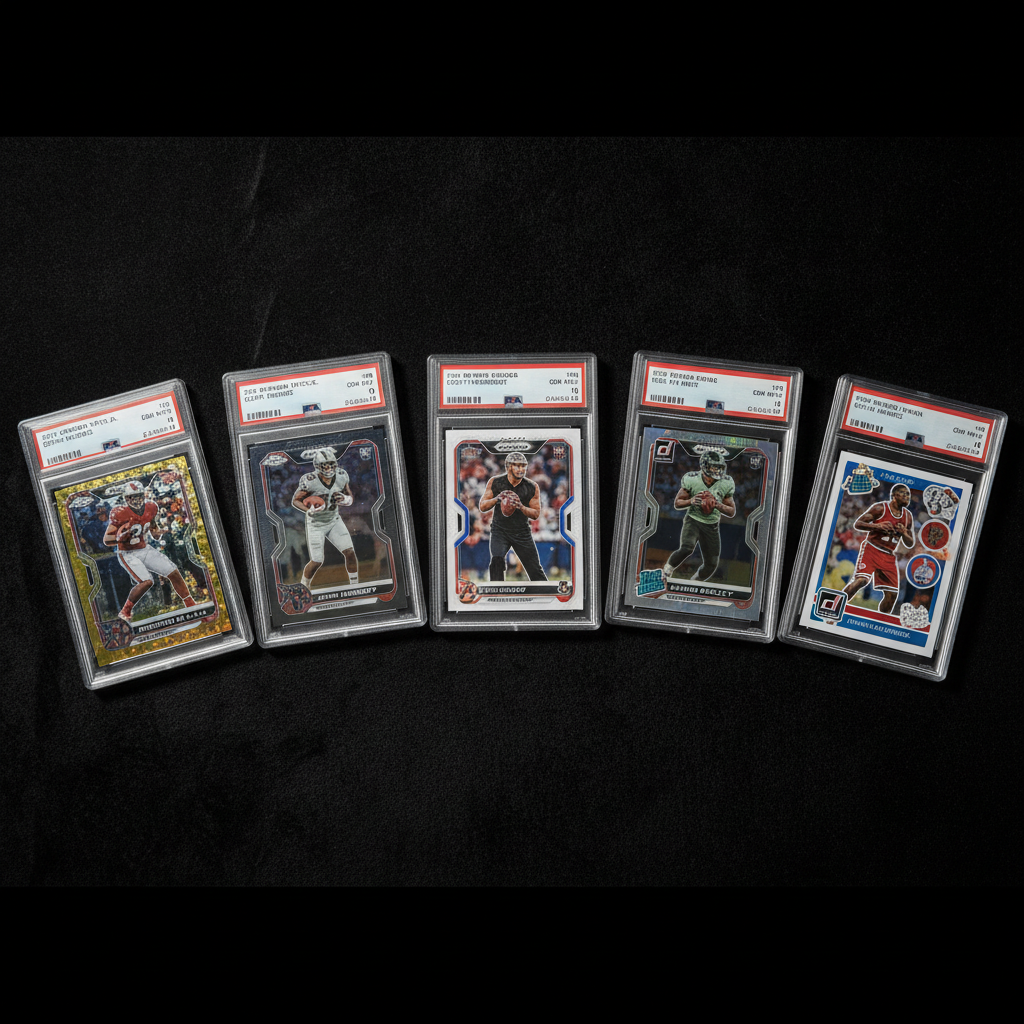
The best PSA 10 sports card to buy under $200 right now is the 2020 Panini Prizm Anthony Edwards #258 Rookie Card. This guide is for serious collectors and investors who want to add high-quality, professionally graded assets to their portfolio without breaking the bank. We skip the hype and focus on five specific, highly-liquid PSA 10 rookie cards that offer the best combination of player potential, market stability, and long-term value in the sub-$200 category. Our methodology prioritized cards with a robust PSA population (ensuring liquidity), a clear path to future growth based on player performance, and a strong collector brand behind the card itself. These are not speculative penny stocks; they are blue-chip entries into the world of modern card investing.
How We Picked
- PSA 10 Population Count
- Player Ceiling/Potential
- Market Liquidity
- Brand Recognition
- Price Volatility
At a Glance
| Rank | Pick | Best For | Price Range |
|---|---|---|---|
| 1 | 2020 Panini Prizm Anthony Edwards Rookie Card #258 | Investors looking for a highly liquid, blue-chip modern basketball rookie with a clear path to growth. | $90-$130 PSA 10 |
| 2 | 2020 Panini Donruss Joe Burrow Rated Rookie #301 | Football fans who want a graded rookie of an elite QB without spending thousands on Prizm. | $120-$160 PSA 10 |
| 3 | 2001 Topps Chrome Ichiro Suzuki Rookie Card #T266 | Collectors who want to add a stable, iconic, Hall of Fame rookie card to their portfolio. | $150-$200 PSA 10 |
| 4 | 2022 Topps Update Julio Rodriguez Rookie Card #US44 | The high-volume investor who wants to bet on one of baseball's brightest young talents. | $70-$100 PSA 10 |
| 5 | 2020 Panini Mosaic Justin Herbert Rookie Card #204 | The investor who wants a sharp-looking, graded card of a premier NFL QB with a bit more scarcity than a Donruss Rated Rookie. | $130-$170 PSA 10 |
1. 2020 Panini Prizm Anthony Edwards Rookie Card #258
The best all-around modern basketball rookie card under $200.
This is the flagship rookie card for one of the NBA's most explosive and charismatic young stars. Despite a high PSA 10 population (over 28,000), the card maintains incredible liquidity and tracks Edwards' rising stardom directly. It's the most recognizable and traded card for a player with a legitimate 'face of the NBA' ceiling.
Best for: Investors looking for a highly liquid, blue-chip modern basketball rookie with a clear path to growth.
Price range: $90-$130 PSA 10
Pros
- Extremely high market liquidity.
- Flagship rookie card of a Tier-1 player.
- Tracks player performance closely.
Cons
- High population count can limit explosive growth.
- Value is sensitive to on-court performance and injuries.
2. 2020 Panini Donruss Joe Burrow Rated Rookie #301
The affordable entry into an elite NFL quarterback.
While his Prizm and Optic rookies are out of reach, Burrow's Donruss Rated Rookie offers exposure to an AFC-leading QB for a fraction of the price. The 'Rated Rookie' logo is iconic, and with a PSA 10 pop of around 15,000, it's liquid but not as diluted as some Prizm counterparts. This is a classic brand for a player who has already proven he can lead a team to the Super Bowl.
Best for: Football fans who want a graded rookie of an elite QB without spending thousands on Prizm.
Price range: $120-$160 PSA 10
Pros
- Iconic 'Rated Rookie' brand recognition.
- Exposure to a top 5 NFL QB at a low cost.
- Cheaper alternative to his Prizm/Optic rookies.
Cons
- Paper stock (not chrome) is less desired by some investors.
- Susceptible to injury concerns that have plagued Burrow.
3. 2001 Topps Chrome Ichiro Suzuki Rookie Card #T266
A legendary rookie card with surprising stability.
This is a cornerstone card from the early 2000s junk wax era. Ichiro is a first-ballot Hall of Famer with a massive international following. The Topps Chrome brand is king, and this card has a relatively modest PSA 10 population of just over 6,000. For under $200, you get a card with a rock-solid floor and less volatility than modern prospects.
Best for: Collectors who want to add a stable, iconic, Hall of Fame rookie card to their portfolio.
Price range: $150-$200 PSA 10
Pros
- Iconic player with global appeal.
- Relatively scarce in a perfect 10 grade compared to modern cards.
- Lower volatility than unproven prospects.
Cons
- Upside is capped compared to active players.
- Belongs to the 'Traded' set, which is slightly less desirable than the base set.
4. 2022 Topps Update Julio Rodriguez Rookie Card #US44
The high-volume play on baseball's next superstar.
Julio Rodriguez stormed onto the scene and immediately became one of baseball's most exciting players. This is his most accessible Topps flagship rookie card. While the PSA 10 population is enormous (over 40,000), the sheer volume of collector interest keeps the market active. It's a low-cost, high-liquidity bet on a player with a 30/30 skill set and a bright future.
Best for: The high-volume investor who wants to bet on one of baseball's brightest young talents.
Price range: $70-$100 PSA 10
Pros
- Extremely affordable entry point.
- Flagship rookie of a 5-tool baseball superstar.
- Insanely high liquidity and trading volume.
Cons
- Massive PSA 10 population will prevent parabolic price increases.
- Baseball market can be slower-moving than basketball or football.
5. 2020 Panini Mosaic Justin Herbert Rookie Card #204
The stylish and affordable rookie of a top-tier QB.
For those priced out of Justin Herbert's Prizm or Optic rookies, the Mosaic offers a fantastic alternative. The card design is popular with modern collectors, and it provides exposure to a top-10 NFL QB for under $180. With a PSA 10 pop count under 10,000, it's scarcer than the Burrow Donruss while representing a player with a similar elite ceiling.
Best for: The investor who wants a sharp-looking, graded card of a premier NFL QB with a bit more scarcity than a Donruss Rated Rookie.
Price range: $130-$170 PSA 10
Pros
- Popular modern set with a distinct look.
- Graded rookie of an elite young quarterback.
- More limited PSA 10 pop than many contemporaries.
Cons
- Mosaic is a newer brand, not as established as Prizm or Optic.
- Herbert is in a hyper-competitive AFC West.
How to Buy
When buying PSA 10 cards under $200, your strategy should be surgical.
Where to Buy: eBay is your primary marketplace. Use the filters: toggle "Sold Items" and "Completed Items" to see real, current market prices, not just what sellers are asking. Pay attention to the seller
Frequently Asked Questions
Is it worth buying a PSA 9 if it's much cheaper?
At this price point, no. The premium for a PSA 10 is significant for modern cards. A PSA 9 of a card that sells for $150 in a 10 might only sell for $40-$50. The liquidity and investor demand are overwhelmingly concentrated in the PSA 10 grade for modern cards, so it's worth paying the premium.
Should I crack a BGS 9.5 and submit to PSA?
This is a high-risk strategy. While a BGS 9.5 (with good subgrades like 10, 10, 9.5, 9) can sometimes cross over to a PSA 10, there's no guarantee. Factoring in the cost of the BGS card, the grading fees, shipping, and the risk of it coming back a PSA 9, it's almost always better to just buy the PSA 10 outright.
Are these cards for flipping or long-term holds?
These picks are best suited for medium to long-term holds (1-5 years). The sub-$200 market for PSA 10s has thin margins for short-term flipping after factoring in fees and shipping. The primary investment thesis for these cards is the continued growth and success of the players themselves.
Why isn't [Player X]'s card on this list?
We focused on cards meeting a strict criteria: PSA 10 grade, current market price under $200, high liquidity, and belonging to a foundational set (like Prizm, Topps, Donruss). Many great players have rookie cards that are either much more expensive (e.g., Luka Doncic Prizm), less liquid, or in less-desirable sets for investment purposes.