Best 5 PSA 10 Plays Under $200
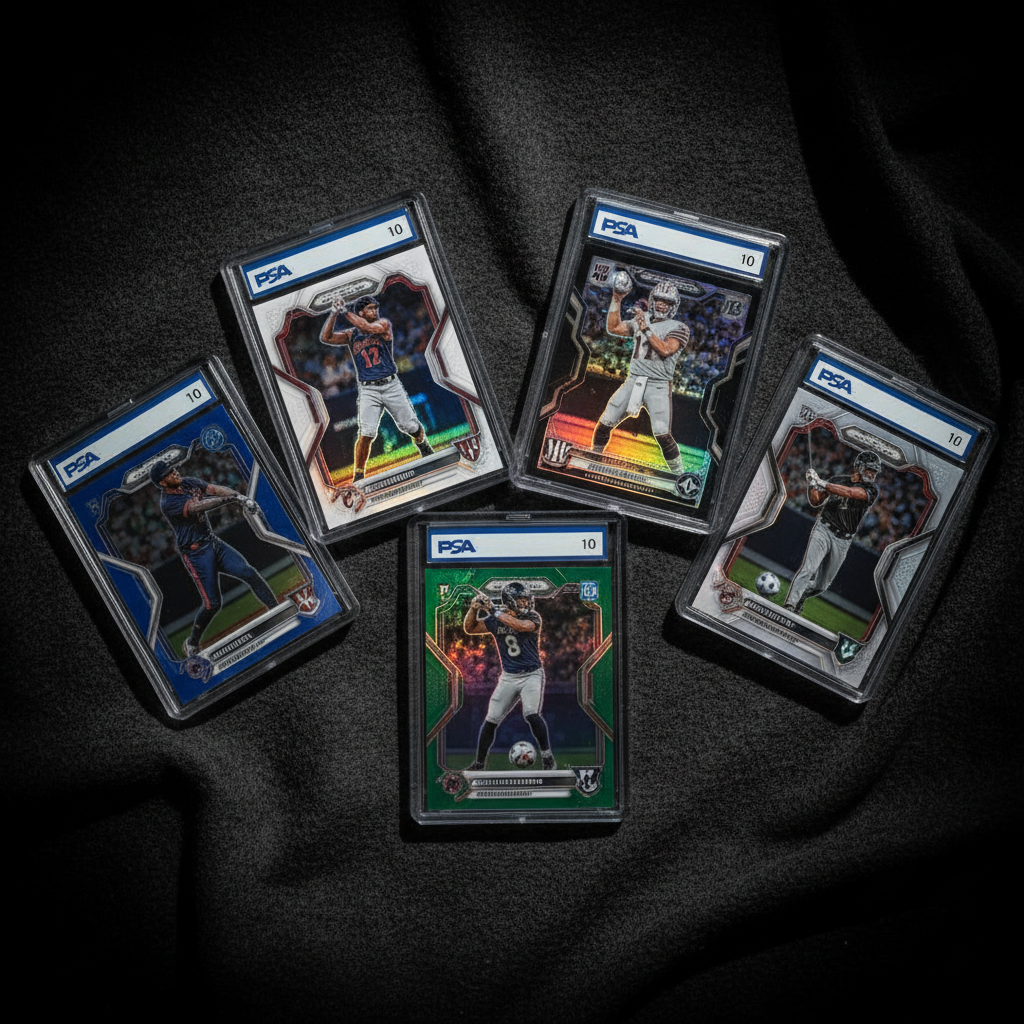
This guide presents the best five PSA 10 graded cards you can acquire for less than $200, right now. We're targeting undervalued modern classics and cards of high-ceiling players before their major market breakouts. Our methodology focused on a blend of low population counts, high player potential, and recent market momentum. If you're a serious collector looking to deploy capital intelligently, these are the cards to watch. We've filtered out the noise to identify assets with a clear, data-driven path to appreciation, focusing on rookie cards from flagship sets that offer long-term liquidity and collector appeal.
How We Picked
- Player Ceiling
- PSA 10 Population
- Current Market Value
- Risk Factor
- Long-Term Liquidity
At a Glance
| Rank | Pick | Best For | Price Range |
|---|---|---|---|
| 1 | 2019 Topps Chrome #203 Fernando Tatis Jr. Rookie Card | Investors with a higher risk tolerance who believe in Tatis Jr.'s talent. | $90-$120 raw, $180-$220 PSA 10 |
| 2 | 2018 Panini Prizm #280 Jaren Jackson Jr. Silver Prizm Rookie Card | Collectors looking for a solid player with a defined role and upside. | $70-$100 raw, $150-$190 PSA 10 |
| 3 | 2020 Topps Chrome #277 Luis Robert Rookie Card | Speculators who are willing to bet on talent overcoming injury history. | $40-$60 raw, $80-$100 PSA 10 |
| 4 | 2022 Bowman Paper #BP-50 Jackson Holliday 1st Bowman | Investors who want to follow the 'buy the prospect' strategy. | $50-$70 raw, $120-$150 PSA 10 |
| 5 | 2019 Panini Prizm #248 Ja Morant Base Rookie Card | Investors who believe in second chances and Morant's long-term stardom. | $80-$110 raw, $160-$200 PSA 10 |
1. 2019 Topps Chrome #203 Fernando Tatis Jr. Rookie Card
The ultimate high-risk, high-reward play in modern baseball.
Despite his controversial past, Tatis Jr. remains one of the most electrifying talents in baseball. His 2019 Topps Chrome rookie card in a PSA 10 is available for a fraction of its 2021 peak (often trading hands for $100-$150). With a relatively low PSA 10 population compared to other modern stars and a return to elite form, this card has a clear path to double or triple its current value.
Best for: Investors with a higher risk tolerance who believe in Tatis Jr.'s talent.
Price range: $90-$120 raw, $180-$220 PSA 10
Pros
- Massive upside if he returns to MVP-caliber form
- High brand recognition with a flagship rookie card
- Currently undervalued compared to peak prices
Cons
- Performance and off-field risks remain
- Market sentiment can be volatile
2. 2018 Panini Prizm #280 Jaren Jackson Jr. Silver Prizm Rookie Card
A defensive powerhouse's key rookie with breakout potential.
As a recent Defensive Player of the Year and a key piece of the Memphis Grizzlies' young core, Jaren Jackson Jr. has a solid foundation. His Silver Prizm rookie card is his most sought-after non-numbered rookie. Currently trading in the $150-$190 range for a PSA 10, it offers exposure to a player whose offensive game has yet to peak. As the league continues to value versatile big men, this card is positioned for growth.
Best for: Collectors looking for a solid player with a defined role and upside.
Price range: $70-$100 raw, $150-$190 PSA 10
Pros
- Key rookie card of an elite defensive player
- Silver Prizms are highly liquid and sought after
- Potential for a significant value increase if his offense develops
Cons
- Injury history is a concern
- May always be the second or third option on his team
3. 2020 Topps Chrome #277 Luis Robert Rookie Card
An undervalued rookie from a hyped prospect.
Luis Robert was one of the most hyped prospects in recent memory, and while his career has been hampered by injuries, his talent is undeniable. His 2020 Topps Chrome rookie card in a PSA 10 can be found for under $100. This is a player with 40/40 potential, and if he can stay healthy for a full season, his card market will see a significant correction. The low entry point makes this an attractive speculation.
Best for: Speculators who are willing to bet on talent overcoming injury history.
Price range: $40-$60 raw, $80-$100 PSA 10
Pros
- Five-tool player with immense raw talent
- Low cost of entry for a highly-touted prospect's flagship rookie
- Huge potential for price correction on positive performance
Cons
- Significant injury risk
- Plays on a team with limited national exposure
4. 2022 Bowman Paper #BP-50 Jackson Holliday 1st Bowman
The #1 prospect in baseball's first and most important card.
Acquiring the 1st Bowman card of the consensus #1 prospect in baseball is a proven strategy. Jackson Holliday, son of former MLB star Matt Holliday, has dominated every level of the minor leagues. His 2022 Bowman Paper 1st Bowman in a PSA 10 is still available for under $150. As he gets closer to his MLB debut, the hype and price for this card will inevitably increase. This is a chance to get in on the ground floor.
Best for: Investors who want to follow the 'buy the prospect' strategy.
Price range: $50-$70 raw, $120-$150 PSA 10
Pros
- 1st Bowman of the undisputed #1 prospect in baseball
- Strong MLB bloodlines and a high floor
- Market for 1st Bowmans is very strong leading up to and upon MLB debut
Cons
- Prospect risk is always a factor
- Paper card, not chrome, which some investors prefer
5. 2019 Panini Prizm #248 Ja Morant Base Rookie Card
A superstar's base rookie at a discount.
Ja Morant is a bona fide superstar, but recent off-court issues have suppressed his card prices. His 2019 Panini Prizm base rookie card in a PSA 10 is currently trading for well under $200, a significant discount from its highs. Morant has the talent and marketability to be one of the faces of the NBA. If he can maintain a clean slate, his cards are poised for a major rebound. This is a textbook 'buy the dip' opportunity.
Best for: Investors who believe in second chances and Morant's long-term stardom.
Price range: $80-$110 raw, $160-$200 PSA 10
Pros
- Proven superstar talent with a massive following
- Flagship base rookie from a landmark set
- Significant discount from previous market highs
Cons
- Off-court concerns are real and could resurface
- High PSA 10 population means gains may be capped compared to rarer parallels
How to Buy
When buying PSA 10 graded cards, always verify the certification number on the PSA website. Use eBay's 'Sold' listings to gauge current market prices, and don't be afraid to make offers below the asking price. Look for cards with good centering and eye appeal, even within the PSA 10 grade. For sourcing, stick to reputable dealers and platforms like eBay, MySlabs, and COMC. Avoid buying raw cards with the intention of grading unless you are experienced in evaluating card condition; it's often cheaper to buy a card already graded PSA 10 than to submit a raw card and hope for the best. Common pitfalls include overpaying during hype cycles and not diversifying your portfolio. Stick to your budget and your investment thesis.
Frequently Asked Questions
Why PSA 10? Why not BGS 9.5 or SGC 9.5?
PSA 10 is the industry standard for modern cards and typically carries the highest liquidity and premium. While BGS and SGC are reputable grading companies, PSA's dominance in the market makes their 'Gem Mint 10' grade the benchmark for investors.
Is a higher population count always bad?
Not necessarily. A high population can indicate strong collector demand and a liquid market. However, for investment purposes, a lower population relative to demand is what creates scarcity and drives long-term value.
Should I sell when a player gets hot?
It depends on your strategy. If you're a short-term trader, selling into hype is a valid approach. If you're a long-term investor, you may want to hold through initial price spikes, believing the player's career trajectory will lead to even higher values.
How much does the 'brand' of the card (e.g., Prizm vs. Topps Chrome) matter?
It matters immensely. Prizm is the king of basketball and football, while Topps Chrome is the benchmark for baseball. Sticking to these flagship brands for rookie cards is almost always the safest and most liquid bet.