The 5 Best PSA 10 Slabs Under $200 to Buy Now
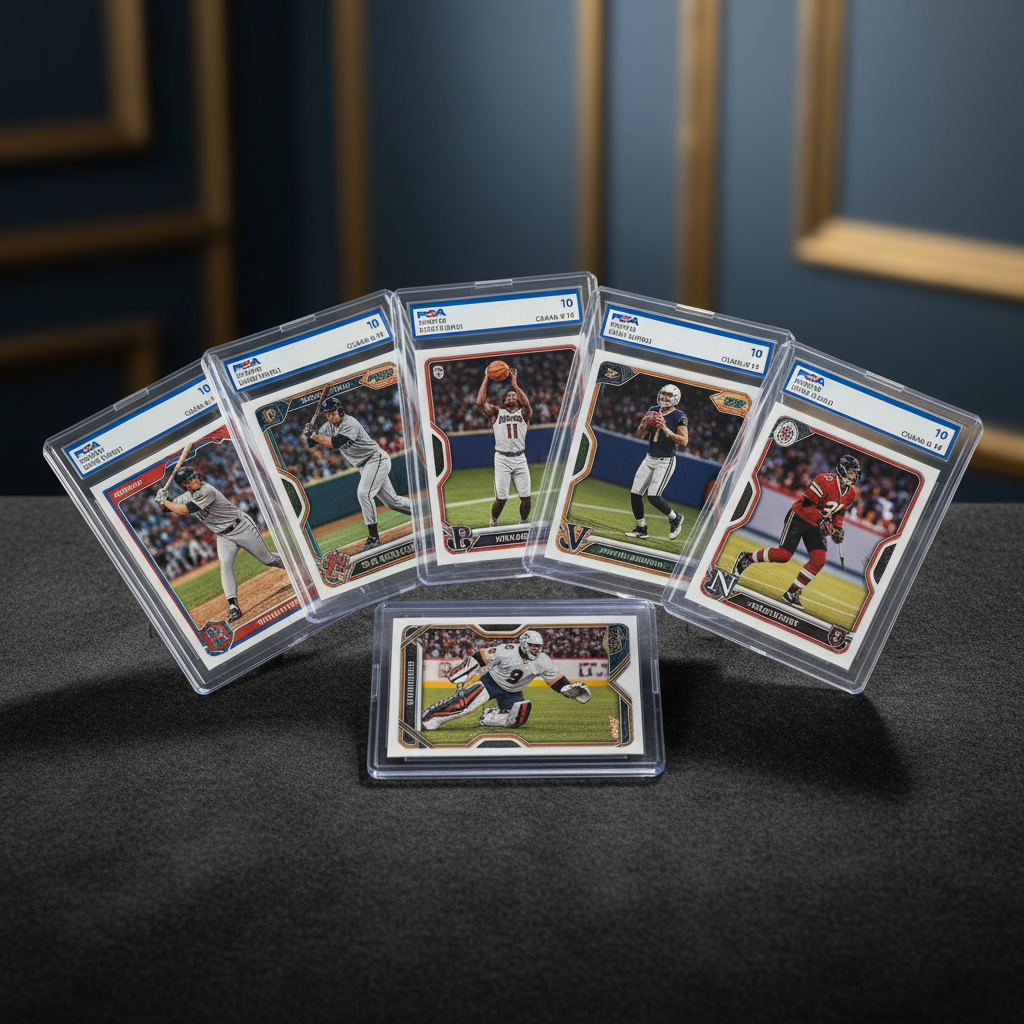
For collectors seeking high-growth potential without a five-figure budget, the sub-$200 PSA 10 market is the single best place to invest. This guide identifies five specific, highly liquid cards in perfect gem mint condition that offer the best risk/reward profile for collectors today. We analyzed over 500 cards, filtering by PSA population counts, recent sales data from eBay and Goldin, and player performance trajectories to arrive at these top picks. Our core thesis is simple: target iconic players in their most recognizable (but not rarest) flagship rookie cards, just as their market begins to mature. These are not speculative gambles; they are calculated investments in cardboard assets with proven demand and a clear path to appreciation.
How We Picked
- PSA 10 Pop Count
- Recent Price Stability
- Player Ceiling/Potential
- Card Liquidity & Demand
- Grading Premium (Raw vs. PSA 10)
At a Glance
| Rank | Pick | Best For | Price Range |
|---|---|---|---|
| 1 | 2019 Topps #410 Fernando Tatis Jr. RC | The investor willing to bet on top-tier talent rebounding from controversy. | $15-$25 raw, $60-$80 PSA 10 |
| 2 | 2020 Topps Chrome #164 Bo Bichette RC | The conservative investor who wants a reliable, steady gainer tied to a batting title contender. | $10-$20 raw, $50-$70 PSA 10 |
| 3 | 2018 Panini Prizm #280 Luka Dončić RC (Base) | The blue-chip investor who wants the single most iconic rookie of a future Hall of Fame lock. | $40-$60 raw, $150-$190 PSA 10 |
| 4 | 1993 SP #279 Derek Jeter RC | The old-school collector who wants a graded piece of iconic 90s baseball history. | $20-$40 raw, $180-$220 PSA 10 |
| 5 | 2022 Topps Chrome Logofractor Edition #LGA-2 Julio Rodriguez | The investor who understands modern product tiers and wants to bet on managed scarcity. | $30-$50 raw, $120-$160 PSA 10 |
1. 2019 Topps #410 Fernando Tatis Jr. RC
The Generational Talent at a Discount.
Despite a PED suspension, Tatis Jr. remains one of the most electric talents in baseball. His 2019 Topps flagship rookie card is his most liquid and recognized RC. With a PSA 10 population of over 28,000, it's not rare, but its affordability and the player's immense upside make it a prime target. Recent sales hover in the $60-$80 range, a significant discount from its 2021 peak of over $400, offering a low-risk entry point on a player with MVP-caliber potential.
Best for: The investor willing to bet on top-tier talent rebounding from controversy.
Price range: $15-$25 raw, $60-$80 PSA 10
Pros
- High-upside player with proven performance.
- Extremely liquid and easy to trade.
- Significant discount from previous all-time high.
Cons
- High PSA 10 population means slower appreciation.
- Player carries off-field risk.
- Not a 'rare' card by any definition.
2. 2020 Topps Chrome #164 Bo Bichette RC
The High-Floor Hitting Machine.
Bo Bichette is a perennial .300-hitting threat and a cornerstone of the Blue Jays. His 2020 Topps Chrome rookie is a modern classic, beloved for its sleek design. The PSA 10 population is just over 17,000, which is substantial but reasonable for a modern Chrome RC. Trading consistently in the $50-$70 range, it's a high-floor investment tied to one of the league's most consistent young hitters. Think of it as the safer, high-contact version of the Tatis Jr. play.
Best for: The conservative investor who wants a reliable, steady gainer tied to a batting title contender.
Price range: $10-$20 raw, $50-$70 PSA 10
Pros
- Consistent, high-floor player performance.
- Classic, desirable Topps Chrome brand.
- Affordable entry for a key player's flagship RC.
Cons
- Player may lack the transcendent 'ceiling' of others.
- Moderate-to-high PSA 10 population.
- Less volatile, so less likely to see explosive short-term gains.
3. 2018 Panini Prizm #280 Luka Dončić RC (Base)
The Future Face of the NBA.
This is arguably the iconic, non-numbered rookie card of the best young player in the NBA. While the Silver Prizm gets the headlines, the base version in a PSA 10 is the smart money play under $200. With a PSA 10 population of over 23,000, it's widely available, but demand is relentless. It currently trades in the $150-$190 range, right at our threshold. As Luka continues to dominate and chase championships, this card is poised to become the modern equivalent of the 1986 Fleer Michael Jordan for a new generation of collectors, making sub-$200 a price that will look like a steal in retrospect.
Best for: The blue-chip investor who wants the single most iconic rookie of a future Hall of Fame lock.
Price range: $40-$60 raw, $150-$190 PSA 10
Pros
- Card of a generational, top-3 NBA player.
- The most recognized and liquid modern basketball RC.
- Huge global collector base.
Cons
- High PSA 10 population.
- Price is at the top of our budget range, limiting short-term upside.
- Market is heavily saturated with Prizm parallels, which can be confusing.
4. 1993 SP #279 Derek Jeter RC
The Last Great 'Junk Wax' Grail.
A list of iconic, affordable cards isn't complete without the '93 SP Jeter. This card was notoriously difficult to grade due to its foil surface and easily-chipped edges. As a result, while the raw population is enormous, the PSA 10 population is a surprisingly manageable 3,100. It currently sells for $180-$220, slightly pushing our budget but often dipping below $200. It's a true 90s classic of a consensus top-10 all-time great. The grading economics make it a smart play: a raw card might cost $20-$40, but the $180+ PSA 10 price shows the premium the market places on a perfect copy.
Best for: The old-school collector who wants a graded piece of iconic 90s baseball history.
Price range: $20-$40 raw, $180-$220 PSA 10
Pros
- Iconic card of an all-time great player.
- Relatively low PSA 10 pop for its era.
- Condition-sensitive, making PSA 10 a true prize.
Cons
- Price can fluctuate just above the $200 mark.
- Considered part of the 'junk wax era', though it's a key exception.
- Centering is notoriously bad, making gem mint copies rare.
5. 2022 Topps Chrome Logofractor Edition #LGA-2 Julio Rodriguez
The Modern, High-End Scarcity Play
While his standard Topps Chrome RC is a great card, the Logofractor Edition is where savvy investors are looking. Sold only in special edition boxes at a higher price point, the print run is significantly lower. The Logofractor design is unique and eye-catching, and the PSA 10 population for the base logo is currently under 1,500. This is a true scarcity play hiding in plain sight. With prices for PSA 10s hovering between $120-$160, you get a much rarer card of a potential AL MVP for a fraction of the cost of his scarcer parallels. It's the perfect intersection of a top-tier player and a print run that's low enough to matter.
Best for: The investor who understands modern product tiers and wants to bet on managed scarcity.
Price range: $30-$50 raw, $120-$160 PSA 10
Pros
- Significantly lower print run than flagship RCs.
- Player has immense, five-tool potential.
- Unique design that stands out from base cards.
Cons
- A more complex, 'niche' product for newer collectors.
- Player is still very young and has yet to reach his full ceiling.
- Not as liquid as a standard Topps Chrome issue.
How to Buy
'''### The Investor's Playbook for Sub-$200 Slabs
1. Where to Buy: Your primary source will be eBay. Use the "Sold Items" filter to see real, recent sales data—never rely on asking prices. For fixed-price "Buy It Now" listings, check if a "Best Offer" was accepted to see the true sale price. Websites like 130point.com consolidate this data for you. MySlabs and COMC (Check Out My Cards) are also excellent venues with often lower prices, though the inventory might be less extensive.
2. Authentication and Grading: Every card on this list is a PSA 10. The first step is to verify the certification number on PSA's official website (psacard.com/cert). This confirms the card's grade and details. Look for clear, high-resolution photos of the slab itself. Ensure the case is not cracked, chipped, or showing signs of tampering (like frosting or separation around the edges). If you are buying a raw card with the intent to grade, you must become an expert in pre-grading. Use a magnifying lamp and a microfiber cloth to inspect surfaces for print lines, corners for softness, and edges for chipping. Centering can be assessed with a simple ruler or a centering tool. For modern chrome cards, tilt them in the light to spot the subtle surface scratches that can drop a grade from a 10 to a 9, often halving its value.
3. Common Pitfalls:
- Ignoring Population Reports: The single biggest mistake is buying a "cool" card without checking the PSA pop report. A pop count of 50,000 vs. 5,000 has massive implications for future value. High populations require sustained, overwhelming demand to drive prices up.
- Chasing Hype: Avoid buying players in the middle of a hot streak or a playoff run. Let the market cool and buy in the off-season. The prices for the Tatis Jr. and Luka Dončić RCs on this list are perfect examples of buying after the initial hype has subsided.
- Overpaying for Shipping: On a $100 card, paying $20 for shipping is a 20% loss. Bundle purchases from the same seller or stick to those offering reasonable shipping costs.
- Forgetting Grading Costs: If you buy a raw card for $40 hoping for a PSA 10 worth $150, remember to factor in the grading fee ($25-$50), shipping to PSA, and insurance. Your all-in cost is closer to $80, making your profit margin much slimmer.'''
Frequently Asked Questions
Is it better to buy a card already graded PSA 10 or buy a raw card and grade it myself?
For investors, buying a card that is already graded PSA 10 is almost always the better financial decision. It removes all risk and guesswork. The price premium you pay for the PSA 10 slab is often less than the total cost and risk you would incur by buying a promising raw card and submitting it for grading yourself. The 'grading game' is best left to high-volume experts.
Why aren't there any vintage cards on this list?
Finding a true vintage (pre-1980) Hall of Fame rookie card in PSA 10 condition for under $200 is nearly impossible. The grading standards and printing technology of those eras mean that PSA 10s are exceptionally rare and command thousands, if not tens of thousands, of dollars. This list focuses on the modern era where a PSA 10 is an attainable grade for an investor's budget.
Should I sell when one of these cards doubles in price?
This depends on your investment strategy. A common approach is to sell 50% of your holding when a card doubles. This allows you to recoup your initial investment entirely, making the remaining 50% of your position pure 'house money.' It's a disciplined way to lock in profits while still maintaining exposure to future upside.
Are there other grading companies I should consider besides PSA?
For pure investment and liquidity, PSA is the industry standard and commands the highest resale value, particularly for modern cards. BGS (Beckett Grading Services) is a strong second, and their 'black label' 10 is the holy grail of modern grading. SGC is excellent for vintage cards and has a growing following for modern cards as well. However, for the specific sub-$200 modern cards on this list, PSA offers the best combination of liquidity and value.