The Best 5 Rookie Cards to Buy Now For Under $500
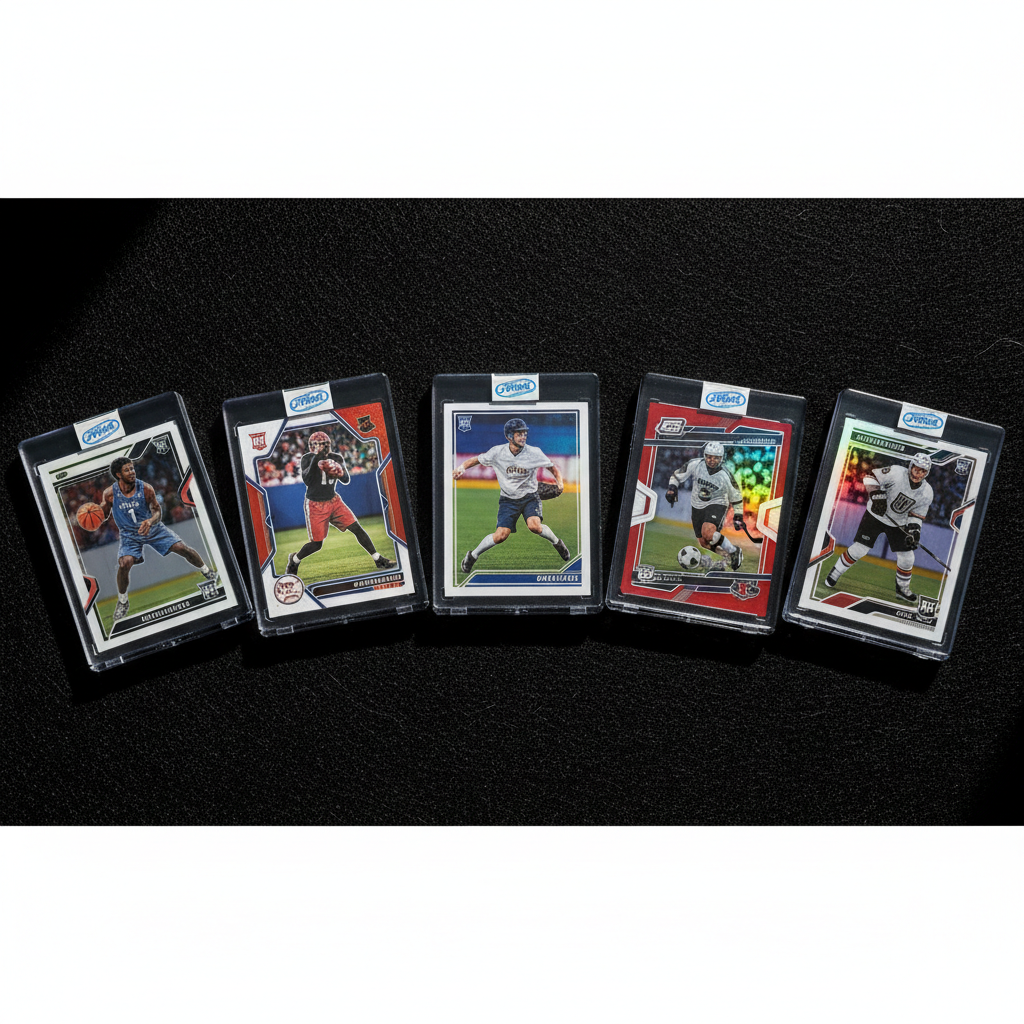
The single best way to build a valuable collection is to acquire iconic rookie cards of generational players before they hit their market peak. This guide is for serious collectors looking to deploy $200-$500 in capital for maximum long-term impact. We’re not hunting for speculative penny stocks; we’re acquiring blue-chip assets. Our methodology prioritizes players with established elite talent, cards from flagship sets (Prizm, Topps Chrome), and favorable grading economics. After analyzing dozens of candidates, we’ve pinpointed five essential rookie cards that represent the best intersection of value, liquidity, and long-term upside in today’s market.
How We Picked
- Player's Long-Term Value
- Set & Brand Significance
- Graded Population Scarcity
- Market Liquidity & Demand
- Price Ceiling Potential
- Grading Economics
At a Glance
| Rank | Pick | Best For | Price Range |
|---|---|---|---|
| 1 | 1997 Topps Chrome Tim Duncan #115 | The investor who wants a proven, stable asset with a high floor and significant long-term upside. | $100-$180 raw, $300-$450 PSA 9 |
| 2 | 2020 Panini Prizm Joe Burrow #307 | The collector who wants to invest in a current NFL superstar with a clear path to future market growth. | $40-$70 raw, $180-$250 PSA 10 |
| 3 | 2020 Panini Prizm Anthony Edwards #258 | The forward-thinking investor looking for a high-upside play on a future face of the NBA. | $120-$200 raw, $350-$450 PSA 9 |
| 4 | 2022 Topps Chrome Julio Rodriguez #204 | The collector who wants a low-cost, high-grade entry point into a potential future legend of baseball. | $20-$40 raw, $70-$100 PSA 10 |
| 5 | 2018 Panini Prizm World Cup Kylian Mbappé #80 | The global investor looking to diversify into the world's most popular sport with a proven superstar. | $80-$150 raw, $300-$400 PSA 10 |
1. 1997 Topps Chrome Tim Duncan #115
The single best blue-chip rookie card investment in the under-$500 category.
This is the definitive rookie card of a top-10 all-time NBA player from the most important basketball set of the 1990s. The card is notoriously condition-sensitive, with chipping and centering issues rampant. A PSA 9, available for under $400, represents incredible value, as the PSA 10 is a $3,000+ card, creating massive upside if you can find a raw card to grade or simply hold the 9 for long-term appreciation. With a PSA 9 population under 5,000, it's far scarcer than modern equivalents.
Best for: The investor who wants a proven, stable asset with a high floor and significant long-term upside.
Price range: $100-$180 raw, $300-$450 PSA 9
Pros
- All-time great player with a secure legacy.
- Iconic, condition-sensitive set.
- Massive price gap between PSA 9 and 10 offers upside.
- High liquidity.
Cons
- Player is retired, so no on-court catalyst for growth.
- Refractor version is unattainable in this budget.
2. 2020 Panini Prizm Joe Burrow #307
The premier rookie card for a top-3 NFL quarterback at a significant discount from its peak.
Joe Burrow has already proven he can lead a team to the Super Bowl, and top-tier QBs drive the football card market. The 2020 Prizm set was heavily printed, but Burrow's talent is undeniable. After a cooling-off period from the 2022 market highs, his base Prizm rookie in a PSA 10 is available for just over $200. This is an accessible entry point for a player who has years of elite performance ahead of him, with multiple MVP and Super Bowl runs as potential price catalysts.
Best for: The collector who wants to invest in a current NFL superstar with a clear path to future market growth.
Price range: $40-$70 raw, $180-$250 PSA 10
Pros
- Elite quarterback, the most important position in the hobby.
- Flagship Prizm set is highly liquid.
- Prices have corrected to a very attractive entry point.
- Strong potential for future price spikes based on performance.
Cons
- High PSA 10 population means gains will be tied directly to player performance.
- Base card, not a rarer parallel.
3. 2020 Panini Prizm Anthony Edwards #258
The face of the NBA's next generation, with a key rookie card that is still affordable.
Anthony Edwards has the talent, charisma, and highlight-reel playing style to become a global superstar. His 2020 Prizm rookie is his most traded and recognized card. While a PSA 10 currently hovers just above our $500 limit, well-centered raw copies and PSA 9s are readily available well within budget. The grading economics are compelling: a sharp raw copy purchased for ~$150 could become a $600+ PSA 10, a risk/reward profile that is hard to beat. As Edwards continues his ascent, this card will be the one everyone wishes they bought sooner.
Best for: The forward-thinking investor looking for a high-upside play on a future face of the NBA.
Price range: $120-$200 raw, $350-$450 PSA 9
Pros
- Explosive player with clear superstar trajectory.
- Liquid and highly recognizable Prizm brand.
- Huge media and fan following.
- Favorable grading economics for sharp raw copies.
Cons
- PSA 10 is currently just outside the price range.
- Card value is dependent on future performance and avoiding injury.
4. 2022 Topps Chrome Julio Rodriguez #204
Baseball's most exciting young player in the industry's most iconic set.
Topps Chrome is the benchmark for baseball rookie cards, and Julio Rodriguez is a dynamic 5-tool player with massive hobby appeal. Unlike heavily printed basketball and football sets, Topps Chrome print runs are more modest, and the PSA 10 population for this key rookie is still under 10,000. For under $100, you can acquire a PSA 10 of a player who has already won Rookie of the Year and has the potential to be an MVP-caliber perennial All-Star. It's the perfect intersection of low cost, high grade, and huge potential.
Best for: The collector who wants a low-cost, high-grade entry point into a potential future legend of baseball.
Price range: $20-$40 raw, $70-$100 PSA 10
Pros
- Legitimate 5-tool superstar potential.
- Flagship Topps Chrome brand.
- Affordable in a perfect PSA 10 grade.
- Lower print run compared to Prizm counterparts.
Cons
- Baseball market can be more volatile than basketball/football.
- Player is still very young and developing.
5. 2018 Panini Prizm World Cup Kylian Mbappé #80
A core rookie card for arguably the world's most famous athlete.
Kylian Mbappé is a global icon whose card market is driven by a worldwide audience. The 2018 Prizm World Cup set is his first appearance in the flagship Prizm brand and is recognized as one of his key rookies. With the World Cup cycle creating massive spikes in interest every four years, this card has built-in market catalysts. A PSA 10 is attainable for under $400, a bargain for a player of his stature. As soccer continues to grow in the US market, the ceiling for this card is immense.
Best for: The global investor looking to diversify into the world's most popular sport with a proven superstar.
Price range: $80-$150 raw, $300-$400 PSA 10
Pros
- Global icon with a massive following.
- Key rookie from the first-ever Prizm World Cup set.
- Cyclical demand from the World Cup.
- Relatively low PSA 10 pop compared to his contemporaries in other sports.
Cons
- Soccer card market is less established in the US than the big 3 sports.
- Multiple other sticker and card rookies from 2016-2017 dilute the 'true rookie' debate.
How to Buy
Every card on this list is a smart buy, but how you buy is just as important. Here’s your purchasing playbook:
Where to Buy:
- eBay: The largest marketplace with the most liquidity. Use the "Sold Items" filter to research recent comps before bidding or buying. Look for sellers with long track records and high feedback scores (99.5% or better).
- MySlabs: A fixed-price marketplace popular with experienced collectors. Prices are often slightly lower than eBay because fees are lower. It
Frequently Asked Questions
Should I buy raw or graded cards?
For this budget, buying graded is often the smarter play. A PSA or BGS graded card is authenticated, protected, and easier to sell. For modern cards like Burrow or Rodriguez, buying a PSA 10 outright is cheaper than the risk of buying 3-4 raw cards hoping one will gem. For vintage/90s cards like the Duncan, buying a PSA 9 guarantees a sharp, investment-worthy copy and removes the guesswork.
Why are Panini Prizm and Topps Chrome so important?
These are considered the 'flagship' sets for modern basketball/football (Prizm) and baseball (Topps Chrome). They are the most recognized, most liquid, and most collected sets for a player's core rookie card. While rarer parallels exist, the base rookie from these sets is the benchmark and the most important card for a player's portfolio.
What's the difference between a PSA 9 and a PSA 10?
A PSA 10 (Gem Mint) is a virtually perfect card. A PSA 9 (Mint) may have one minor flaw, like a tiny printing dot or slightly off-center margins. For modern cards with high print runs, the price difference can be 2-3x. For vintage or condition-sensitive cards, the price gap can be 10x or more, making the PSA 9 the smart money investment.
What about parallels like Silver Prizms?
Silver Prizms are a great next step up but often fall just outside the 'under $500' price point for the players on this list. For example, a Joe Burrow Silver Prizm PSA 10 can trade for $800-$1000, compared to ~$200 for the base. If your budget allows, they are an excellent choice, but the base cards on this list offer the best entry point.