The 5 Best Rookie Patch Auto (RPA) Cards for Football Investors
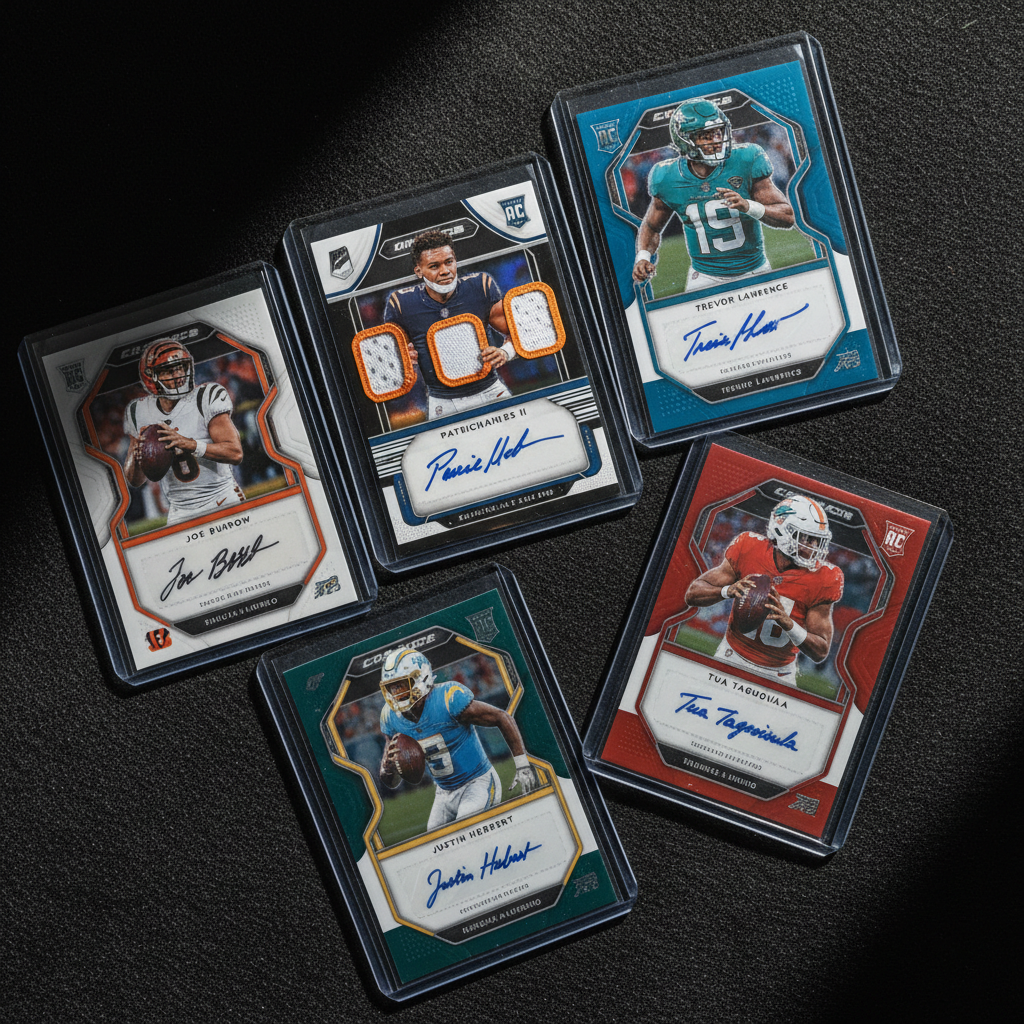
The football card market's most important and liquid asset class is, without question, the Rookie Patch Autograph (RPA). It's the intersection of memorabilia, autograph, and a player's most coveted rookie card, dominated by Panini's high-end brands. This guide provides a definitive ranking of the five best RPAs for serious investors to target right now, balancing brand prestige, player trajectory, and relative value in a post-peak market. We analyzed sales data from eBay and Goldin, PSA/BGS population reports, and player performance metrics to identify cards that offer the best long-term growth potential. Our picks focus on blue-chip brands like National Treasures and Flawless, targeting quarterbacks with elite potential and skill players who dominate their position, providing actionable intelligence for collectors deploying real capital.
How We Picked
- Brand Prestige
- Player's Market Trajectory
- Patch & Autograph Quality
- Relative Scarcity & Population
- Long-Term Value Proposition
At a Glance
| Rank | Pick | Best For | Price Range |
|---|---|---|---|
| 1 | 2023 Panini National Treasures #162 C.J. Stroud RPA /99 | The investor with a high-risk tolerance who wants the single best card from the hottest rookie QB. | $4,500-$7,000 raw, graded copies can exceed $15,000 |
| 2 | 2020 Panini Contenders Optic #104 Justin Herbert RPA /99 | The investor who wants a proven top QB in a classic set without paying the absolute peak NT premium. | $1,500-$2,500 raw, $4,000-$6,000 PSA 10 |
| 3 | 2021 Panini National Treasures #161 Trevor Lawrence RPA /99 | The contrarian investor looking to acquire a top-tier asset during a market downturn before it potentially rebounds. | $2,500-$4,000 raw, high-grade copies can approach $8,000+ |
| 4 | 2020 Panini Flawless #14 Justin Jefferson RPA /25 | The investor who prioritizes blue-chip scarcity and is willing to bet on a non-QB Hall of Fame talent. | $1,800-$3,000, depending on patch quality and grade |
| 5 | 2023 Panini Immaculate Collection #101 Anthony Richardson RPA /99 | The speculative investor with a strong stomach for risk who wants a shot at massive returns on a high-potential QB. | $800-$1,500 raw, $2,500-$4,000 in a BGS 9.5 |
1. 2023 Panini National Treasures #162 C.J. Stroud RPA /99
The undisputed modern king of football cards.
A record-shattering rookie season from a franchise QB meets the hobby's most prestigious brand. The on-card autograph and jumbo patch on the iconic shield design make this the chase card of the decade. Its market is highly liquid and has established a new ceiling for modern football cards.
Best for: The investor with a high-risk tolerance who wants the single best card from the hottest rookie QB.
Price range: $4,500-$7,000 raw, graded copies can exceed $15,000
Pros
- Apex 'National Treasures' brand
- Historic rookie season performance
- On-card autograph and jumbo patch
- Massive market demand and liquidity
Cons
- Extremely high entry price
- Market is at a speculative peak
- High population count of /99 can limit long-term scarcity
2. 2020 Panini Contenders Optic #104 Justin Herbert RPA /99
The chrome-finish 'Contenders' ticket with proven top-tier QB appeal.
This card merges the iconic Contenders Rookie Ticket design with the premium Optic chrome stock collectors love. Herbert is a proven top-10 NFL QB with a massive contract, and his market is more stable than that of unproven rookies. This Optic version is significantly scarcer and more condition-sensitive than his base Contenders ticket auto, offering better long-term value.
Best for: The investor who wants a proven top QB in a classic set without paying the absolute peak NT premium.
Price range: $1,500-$2,500 raw, $4,000-$6,000 PSA 10
Pros
- Iconic 'Rookie Ticket' design on chrome
- Proven, elite franchise QB
- Lower population than base Contenders auto
- Strong market stability
Cons
- Sticker autograph
- Less prestigious than National Treasures
3. 2021 Panini National Treasures #161 Trevor Lawrence RPA /99
A buy-the-dip opportunity on the hobby's former chosen one.
Two years ago, this card was priced near current Stroud levels. Following a solid but not spectacular 2023, Lawrence's NT RPA is available for a significant discount. He still possesses elite talent, just signed a massive extension, and has a clear path back to hobby prominence, making this a classic contrarian play on a blue-chip asset.
Best for: The contrarian investor looking to acquire a top-tier asset during a market downturn before it potentially rebounds.
Price range: $2,500-$4,000 raw, high-grade copies can approach $8,000+
Pros
- Blue-chip 'National Treasures' brand
- Former #1 pick with elite tools
- Price is currently depressed relative to 2022 peak
- On-card auto and premium patch
Cons
- Player performance has been inconsistent
- Market sentiment is currently cool
4. 2020 Panini Flawless #14 Justin Jefferson RPA /25
The best receiver's best card from an ultra-premium brand.
Flawless is Panini's ultra-high-end 'briefcase' product, and this is Jefferson's most coveted RPA. Numbered to just /25 with a striking on-card autograph and a prime patch set against a black-and-white design, it is significantly rarer than his National Treasures RPA. As the undisputed #1 WR in the NFL, Jefferson commands a market premium over all other non-QBs, making this a true grail for those betting on skill players.
Best for: The investor who prioritizes blue-chip scarcity and is willing to bet on a non-QB Hall of Fame talent.
Price range: $1,800-$3,000, depending on patch quality and grade
Pros
- Ultra-premium 'Flawless' brand
- Extremely scarce (numbered to /25)
- On-card autograph and prime patch
- Undisputed best player at his position
Cons
- Non-QB investment ceiling is always lower than a QB's
- Lower market liquidity than National Treasures
5. 2023 Panini Immaculate Collection #101 Anthony Richardson RPA /99
High-risk, high-reward on the league's most athletic quarterback.
This card offers a lower-cost entry point for a 2023 rookie QB with a sky-high ceiling. Immaculate is a top-3 RPA brand, known for its clean designs, acetate card stock, and often stellar, multi-color patches. Richardson's flashes of brilliance before his season-ending injury have kept his market intriguing, creating a speculative buy opportunity far below C.J. Stroud's pricing but within the same elite product tier.
Best for: The speculative investor with a strong stomach for risk who wants a shot at massive returns on a high-potential QB.
Price range: $800-$1,500 raw, $2,500-$4,000 in a BGS 9.5
Pros
- Tier-1 'Immaculate' RPA brand
- Insane athletic potential in a QB
- Much lower entry price than Stroud or Lawrence
- Often features multi-color patches
Cons
- Major injury risk and questions
- Small sample size of NFL performance
- Not the true 'National Treasures' RPA
How to Buy
Investing in a high-end Rookie Patch Auto requires a specific strategy beyond simply clicking "Buy It Now." Here's how to approach it:
1. Sourcing and Price Verification: eBay is the most liquid market, but also the most volatile. Use tools like 130point.com to view actual sold prices, not just asking prices. For ultra-high-end cards, established auction houses like PWCC and Goldin offer better curation and buyer protection, though often at a premium.
2. Grading Economics: For patch cards, the grading service matters. Beckett (BGS) is often preferred for thicker patch cards, as their subgrades for centering, edges, corners, and surface can reward a "gem" card with a BGS 9.5 or prestigious BGS 10 grade. PSA is the king of overall market liquidity and often commands the highest price for a PSA 10, but their grading of thick cards can be tougher. A BGS 9.5 is often seen as the investment-grade standard for modern RPAs. Budget an extra $150-$300 for grading fees and shipping if you buy a raw card.
3. Patch and Autograph Due Diligence: Not all patches are created equal. A three-color, "game-used" patch is far more desirable than a single-color, "player-worn" napkin patch. Scrutinize the autograph quality; a clean, on-card signature is always superior to a streaky sticker auto. Be wary of "windowing" on the back of the card, which can sometimes indicate a replaced patch.
4. Common Pitfalls: Avoid getting caught in rookie hype at its absolute peak. The best time to buy is often in the offseason or after a player has cooled off from their initial rookie debut (like our Trevor Lawrence pick). Be patient and disciplined; set a target price based on sales data and don't let FOMO (Fear Of Missing Out) lead you to overpay.
Frequently Asked Questions
Are football RPAs a good long-term investment?
Yes, but they are high-risk, high-reward assets. The most iconic RPAs from the best players (Tom Brady, Patrick Mahomes) have massively outperformed the stock market. However, for every success story, there are dozens of players whose cards become nearly worthless. Stick to blue-chip brands and elite-potential players to mitigate risk.
Why is Panini National Treasures more desirable than other brands like Immaculate or Flawless?
History, brand equity, and market liquidity. National Treasures was one of the first ultra-premium products and has built a 10+ year reputation as 'the' set to own. It consistently carries the highest resale value and has the deepest pool of buyers, making it the safest bet within the high-end market.
Should I buy an RPA raw or already graded?
If your budget is tight, buying raw and grading it yourself can offer the highest upside, but it also carries the most risk if it receives a poor grade. Buying a card already graded (ideally a PSA 10 or BGS 9.5) provides certainty and a locked-in, liquid value, but you pay a premium for that peace of mind. For a first-time RPA investor, buying a graded card is the safer route.
What does '/99' or '/25' mean?
This is the card's serial number, indicating its scarcity. A card numbered '/99' means only 99 copies of that specific card were produced. A lower number, like /25, indicates a much rarer card, which almost always translates to a higher long-term value.