The Best 5 Undervalued Players to Invest in Before the Hype
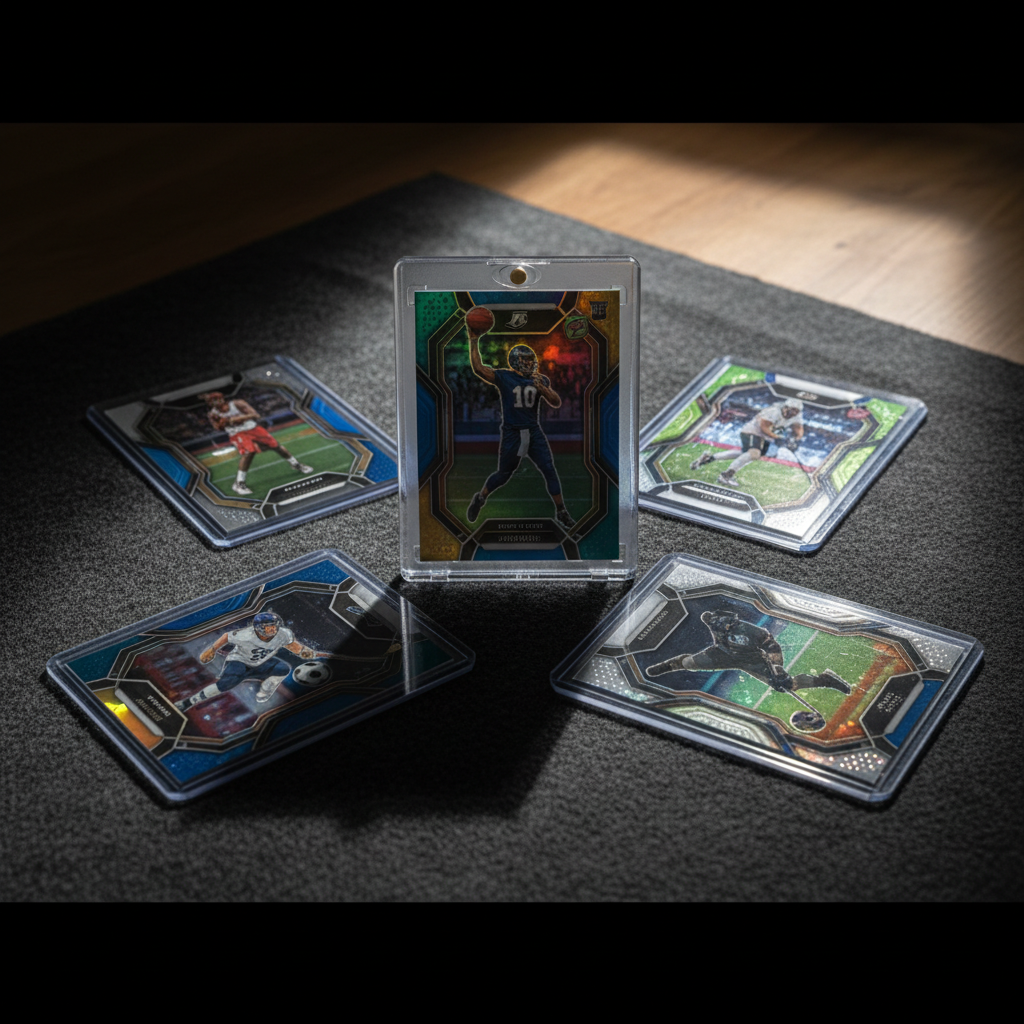
For collectors looking to maximize returns, the game is won in the margins, identifying undervalued assets before they become household names. This guide is for serious investors with a $200 to $5,000 budget who are comfortable with calculated risk. We analyzed dozens of players outside the top-tier hype bubble, focusing on those with elite underlying stats, a clear path to a larger role or stardom, and rookie card populations that haven't yet exploded. Our methodology weighed advanced player statistics (like WAR, PER, and xG), PSA population counts, and recent eBay sales data to pinpoint specific rookie cards with the highest potential for significant value appreciation. The single most important takeaway is this: the best investments are often found in players with elite talent whose card prices don't yet reflect their on-field potential.
How We Picked
- Player's Statistical Ceiling
- Key Rookie Card Scarcity (PSA Pop)
- Market Narrative Potential
- Current Value vs. Peers
- Team/Market Spotlight
At a Glance
| Rank | Pick | Best For | Price Range |
|---|---|---|---|
| 1 | 2019 Topps Chrome Xander Bogaerts #160 | The investor who prioritizes elite, proven production over speculative hype. | $50-$90 raw, $250-$400 PSA 10 |
| 2 | 2021 Topps Chrome Kyle Tucker #127 | The data-driven collector who trusts advanced stats to predict future market value. | $25-$40 raw, $100-$150 PSA 10 |
| 3 | 2020 Panini Prizm Tyrese Haliburton #262 | The basketball investor looking for the next Chris Paul or Steve Nash before their market peak. | $150-$250 raw, $600-$900 PSA 10 (Silver Prizm) |
| 4 | 2022 Topps Chrome Julio Rodriguez #202 (Image Variation) | The investor willing to pay a premium for a potential generational talent, but wants to do it smartly through a scarce variation. | $300-$500 raw, $1,200-$1,800 PSA 10 |
| 5 | 2021 Bowman Chrome Prospects Anthony Volpe #BCP-163 | The investor with a higher risk tolerance betting on the immense branding power of the New York Yankees. | $20-$30 raw, $80-$120 PSA 10 (Base Chrome), Autos $500+ |
1. 2019 Topps Chrome Xander Bogaerts #160
The market is sleeping on a superstar entering his prime.
Xander Bogaerts is a top-5 offensive shortstop who just signed a massive contract with the Padres, yet his key Topps Chrome rookie trades at a fraction of comparable players. With a PSA 10 population under 1,500, the supply is fixed and scarce. His on-base ability and consistent power create a high floor, while the move to a high-profile, winning team in San Diego provides the catalyst for a major market correction.
Best for: The investor who prioritizes elite, proven production over speculative hype.
Price range: $50-$90 raw, $250-$400 PSA 10
Pros
- Top-tier offensive production at a key position.
- Low PSA 10 population (~1,488) for a modern Chrome rookie.
- Recent move to a major market and contending team.
- Trades at a significant discount to players with similar WAR.
Cons
- Not a flashy, high-strikeout player.
- Padres lineup has multiple stars, potentially limiting his media spotlight.
2. 2021 Topps Chrome Kyle Tucker #127
An advanced stats darling with 30/30 potential.
Kyle Tucker is the analytics community's poster child for undervalued superstars. He consistently ranks in the 95th+ percentile in xwOBA, xSLG, and Barrel % according to Baseball Savant. Despite this, his 2021 Topps Chrome rookie PSA 10 is readily available and affordable, with a population over 3,000, offering liquidity. As the Astros' marketing machine eventually focuses on him post-Altuve/Bregman, his market has significant room for growth.
Best for: The data-driven collector who trusts advanced stats to predict future market value.
Price range: $25-$40 raw, $100-$150 PSA 10
Pros
- Elite underlying analytics (xwOBA, Barrel %).
- Consistent power/speed threat (30 HR / 30 SB potential).
- Plays for a perennial contender, ensuring high visibility.
- Liquid market with ample raw and graded copies available.
Cons
- Quiet demeanor has limited his hobby appeal thus far.
- PSA 10 population is relatively high, capping meteoric rises.
3. 2020 Panini Prizm Tyrese Haliburton #262
The next great point guard hiding in a small market.
Tyrese Haliburton has emerged as one of the most efficient and effective point guards in the NBA, leading the league in assists with the Pacers. His Prizm Silver rookie is the key card to own, and its PSA 10 population is currently under 2,000. As Indiana builds a contender around him, his national profile is set to explode. This is a classic case of acquiring a player's key rookie card just as he transitions from 'rising star' to 'bonafide superstar'.
Best for: The basketball investor looking for the next Chris Paul or Steve Nash before their market peak.
Price range: $150-$250 raw, $600-$900 PSA 10 (Silver Prizm)
Pros
- Elite playmaker and leader of a young, exciting team.
- High basketball IQ and efficient scoring translates well for long-term success.
- Key Prizm Silver rookie has a manageable PSA 10 pop count.
- Clear #1 option on his team.
Cons
- Small market (Indiana) limits national media exposure currently.
- Less explosive scoring style than guards like Morant or Edwards.
4. 2022 Topps Chrome Julio Rodriguez #202 (Image Variation)
An MVP-caliber talent whose rarest rookie is still accessible.
While everyone focuses on the base Topps Chrome, the short-printed Image Variation (SP) is the card to target. J-Rod possesses a rare blend of power, speed, and defensive prowess that gives him a path to being the face of baseball. The SP variation captures his charismatic personality and has a PSA 10 population estimated to be less than 5% of the base rookie. It's a way to invest in a blue-chip talent while still capturing scarcity that the mass-produced base cards lack.
Best for: The investor willing to pay a premium for a potential generational talent, but wants to do it smartly through a scarce variation.
Price range: $300-$500 raw, $1,200-$1,800 PSA 10
Pros
- True five-tool player with MVP potential.
- High-charisma player who is very marketable.
- SP Image Variation offers scarcity in a high-print-run set.
- Already has a major brand endorsement with Adidas.
Cons
- High expectations are already priced in, leaving less room for error.
- Mariners' team success will be a major factor in his card market.
5. 2021 Bowman Chrome Prospects Anthony Volpe #BCP-163
The future of the New York Yankees shortstop position.
Investing in the New York Yankees' starting shortstop is a time-tested strategy. Anthony Volpe's 1st Bowman Chrome card is his true 'rookie' in the eyes of tenured collectors, predating his MLB debut and official rookie-logo cards. The card's various color refractor parallels offer entry points at different budget levels, while the base auto is a blue-chip prospect card. Volpe has already shown flashes of a rare power/speed combo from the shortstop position, and if he solidifies himself as a franchise cornerstone in the biggest market in sports, the upside is immense.
Best for: The investor with a higher risk tolerance betting on the immense branding power of the New York Yankees.
Price range: $20-$30 raw, $80-$120 PSA 10 (Base Chrome), Autos $500+
Pros
- Plays the premier position for the premier franchise in baseball.
- 1st Bowman card is the most sought-after prospect card.
- Power/speed combination is highly coveted in the hobby.
- Deep checklist of parallels allows for various investment strategies.
Cons
- Still a young player with high swing-and-miss tendencies.
- Prospect cards carry higher volatility than rookie cards of established players.
How to Buy
How to Buy Undervalued Cards Smartly
Investing in undervalued players requires a different approach than buying blue-chip Hall of Famers. The key is execution and diligent sourcing.
1. Where to Source: eBay is your primary marketplace. Use the 'Sold Items' filter to establish a baseline price before making any purchase. For higher-end cards (over $1,000), consider auction houses like Goldin or PWCC for better vetting and a more stable pricing history. Card shows are excellent for inspecting cards in person but be prepared to negotiate and have your market data (eBay sold prices) ready on your phone.
2. Raw vs. Graded: For modern cards (2018+), buying cards already graded PSA 10 is often the most cost-effective strategy. The cost and time of grading a raw card yourself can often exceed the price difference. However, if you have a sharp eye for condition, buying raw cards and submitting them for grading can yield significant returns. A rule of thumb: if the PSA 10 price is less than 2x the raw price plus grading fees, buy the graded version.
3. Authenticity and Condition: When buying raw, look for high-resolution scans. Key things to check for are surface scratches (hold the card at an angle to the light), corner whitening (even minor fuzz is a red flag), and print lines (common on Prizm and Chrome sets). For cards with autographs, verify it against known authentic examples. Always buy from sellers with a long history of positive feedback.
4. Common Pitfalls: Avoid 'prospecting' on unproven teenagers unless you have a high-risk tolerance; our picks are established players with a track record. Don't fall for artificial scarcity – a 'numbered to /999' card of a bench player is less desirable than a more common base Prizm or Topps Chrome rookie of a superstar. Finally, be patient. Set a target price based on sales data and wait for an auction or 'Buy It Now' that meets your price.
Frequently Asked Questions
Why focus on PSA 10 graded cards?
PSA 10 Gem Mint is the industry standard for modern card condition. It provides liquidity and removes subjectivity, making your card a true commodity. While a PSA 9 is a fine grade, the market pays a significant premium for the 'perfect' 10, and that's where the highest investment returns are often found.
Is it better to buy at auction or 'Buy It Now'?
Auctions can yield the best prices if you are patient and disciplined, especially for cards with high demand where multiple bidders compete. However, they can also lead to overpaying in a bidding war. 'Buy It Now' with 'Best Offer' is a great way to negotiate a fair price based on recent sales data without the pressure of an auction clock. Generally, use auctions for selling and 'Buy It Now' for buying.
How do player injuries affect card value?
Short-term injuries to key players often create the best buying opportunities. When a player is out for a few weeks or months, impatient investors often sell off their holdings, causing a temporary price dip. If you believe in the player's long-term talent and career trajectory, buying during an injury-related dip can be a highly profitable strategy.
What's the difference between a '1st Bowman' and a 'Rookie Card'?
A player's '1st Bowman' card is released in a Bowman-branded product while they are still in the minor leagues, and features the '1st Bowman' logo. A 'Rookie Card' is released in a variety of sets during a player's first year in the major leagues and features the official MLB 'RC' logo. For modern players, tenured collectors consider the 1st Bowman the more desirable and important card, especially the autographed versions.