The 5 Best Vintage Cards for First-Time Investors in 2024
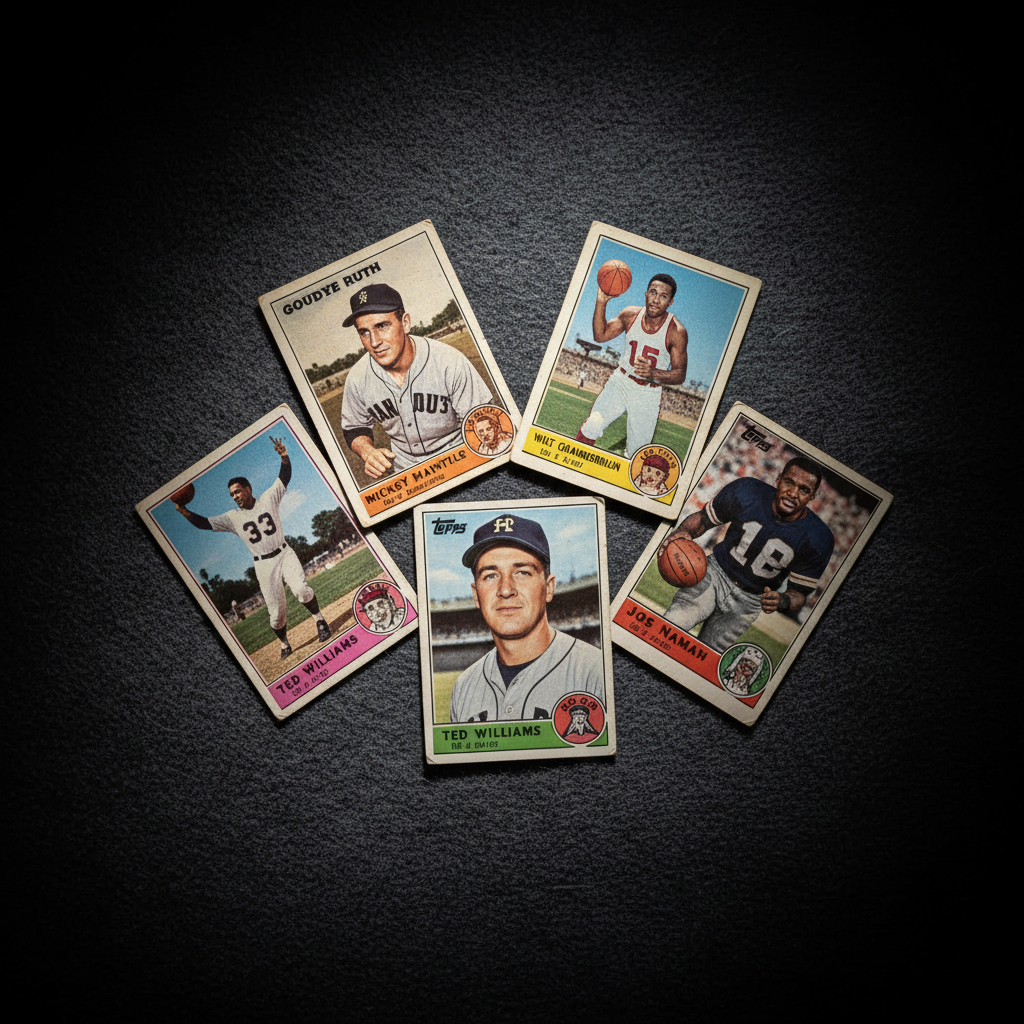
The single best investment for a first-time vintage card buyer is an iconic player's most recognized card in a collector-grade slab from a Tier 1 grading company. This guide is for serious collectors and investors—not flippers—with a $200 to $5,000 budget who want to acquire a tangible piece of sports history with long-term capital appreciation potential. We define "vintage" as pre-1980, a period of lower print runs and higher scarcity than the mass-produced "junk wax" era that followed. Our methodology prioritized player iconography, market liquidity, population scarcity, and accessible entry points in graded (PSA 5-8) condition. These five cards represent the bedrock of any serious vintage portfolio.
How We Picked
- Player Significance
- Card Liquidity
- PSA Population Scarcity (Grades 7-9)
- Entry Price Point (PSA 7)
- Long-Term Growth Potential
At a Glance
| Rank | Pick | Best For | Price Range |
|---|---|---|---|
| 1 | 1959 Topps Mickey Mantle #10 | The investor who wants a blue-chip, cornerstone card of baseball's most collected player. | $250-$400 (PSA 5), $600-$800 (PSA 6) |
| 2 | 1976 Topps Walter Payton #148 | The investor who wants premier exposure to the vintage football market. | $500-$750 (PSA 7), $1,800-$2,500 (PSA 8) |
| 3 | 1968 Topps Nolan Ryan/Jerry Koosman #177 | The investor focused on legendary pitchers and long-term, stable growth. | $800-$1,200 (PSA 6), $2,000-$3,000 (PSA 7) |
| 4 | 1979 O-Pee-Chee Wayne Gretzky #18 | The investor who wants a world-class asset, even in a lower grade. | $1,200-$1,800 (PSA 3), $1,800-$2,500 (PSA 4) |
| 5 | 1969 Topps Reggie Jackson #260 | The investor looking for a high-upside Hall of Fame rookie at a reasonable price. | $300-$450 (PSA 6), $650-$900 (PSA 7) |
1. 1959 Topps Mickey Mantle #10
The most accessible vintage Mantle from a classic set.
While the 1952 Topps Mantle is a millionaire's card, the 1959 Topps offers ownership of a prime-career Mantle from one of the most attractive sets of the 1950s. With a total PSA population of over 9,500, it's liquid and easy to transact, yet high-grade examples are scarce enough to drive long-term value. A PSA 6, with a population of around 1,500, represents the sweet spot of condition and affordability, consistently trading in the $600-$800 range.
Best for: The investor who wants a blue-chip, cornerstone card of baseball's most collected player.
Price range: $250-$400 (PSA 5), $600-$800 (PSA 6)
Pros
- Iconic player and image
- High market liquidity
- More affordable than other 1950s Mantle issues
- Classic, beloved set design
Cons
- High population in low grades
- Not his rookie card
2. 1976 Topps Walter Payton #148
The definitive football rookie card of the 1970s.
Walter 'Sweetness' Payton is an NFL icon, and this is his only recognized rookie card. The 1976 Topps set is notorious for centering issues and print defects, making high-grade copies exceptionally rare. A PSA 8 (Near Mint-Mint), with a population of just over 1,200, is a true prize, but a PSA 7 is a more attainable and still highly respectable investment piece. As the modern card market grapples with overproduction, the clear scarcity and importance of Payton's rookie will continue to drive its value upward.
Best for: The investor who wants premier exposure to the vintage football market.
Price range: $500-$750 (PSA 7), $1,800-$2,500 (PSA 8)
Pros
- Key rookie card of an all-time great
- Lower population counts than baseball counterparts
- Recognizable, classic 1970s design
Cons
- Centering is a common issue
- Card stock is prone to wear and chipping
3. 1968 Topps Nolan Ryan/Jerry Koosman #177
The rookie card of MLB's untouchable strikeout king.
Nolan Ryan's career spanned four decades, making him a household name to multiple generations of fans. This is his most important card, shared with fellow Mets rookie Jerry Koosman. Don't let the dual-player format fool you; Ryan is the sole driver of the card's value. The burlap-sack border design is notoriously difficult to find without chipping. A PSA 7, with a population of around 1,400, offers significant long-term potential and is far more accessible than a PSA 8, which sees a massive price jump.
Best for: The investor focused on legendary pitchers and long-term, stable growth.
Price range: $800-$1,200 (PSA 6), $2,000-$3,000 (PSA 7)
Pros
- Rookie card of the all-time strikeout leader
- Multi-generational appeal
- Challenging set to find in high grade
Cons
- Shares the card with another player
- Burlap border chips easily, making condition key
4. 1979 O-Pee-Chee Wayne Gretzky #18
The most important hockey card in the world.
This is the rookie card of 'The Great One'. We're specifically recommending the O-Pee-Chee (OPC) version over the Topps. The OPC was printed in Canada, is scarcer, and commands a significant premium. While high-grade examples are astronomical, the card is so iconic that even low-grade copies are sound investments. A PSA 3 or 4, often available for under $2,000, secures a stake in the most recognizable and coveted hockey card ever produced. Its global demand and historical significance are unmatched in the sport.
Best for: The investor who wants a world-class asset, even in a lower grade.
Price range: $1,200-$1,800 (PSA 3), $1,800-$2,500 (PSA 4)
Pros
- The rookie card of the undisputed GOAT of hockey
- O-Pee-Chee version is rarer and more desirable
- Global demand and liquidity
Cons
- Heavily counterfeited; buy graded only
- Rough-cut edges and print defects are common on OPC
- High grades are financially inaccessible for most
5. 1969 Topps Reggie Jackson #260
A key rookie card from the pivotal 1960s era.
'Mr. October' is one of baseball's most clutch and memorable power hitters. His 1969 Topps rookie card is an essential piece of any serious vintage collection. The white borders of the 1969 set are prone to showing wear and toning, but this also makes well-preserved copies stand out. With a PSA 7 population of over 2,200, the card is available and liquid, but not so common as to suppress value. It represents a more affordable entry into the blue-chip 1960s rookie market compared to a Mays or Aaron.
Best for: The investor looking for a high-upside Hall of Fame rookie at a reasonable price.
Price range: $300-$450 (PSA 6), $650-$900 (PSA 7)
Pros
- Rookie card of a famous Hall of Famer
- Affordable entry point for a major 1960s rookie
- Classic, clean design
Cons
- Player's reputation is somewhat controversial
- High population relative to other picks
How to Buy
'''### How to Buy Vintage Cards: A Primer for Investors
1. Where to Source Cards:
- eBay: The largest marketplace. It offers the best price discovery but requires the most diligence. Stick to sellers with extensive, high-quality feedback. Look for listings with clear, high-resolution photos of the exact card. Never buy an ungraded high-dollar vintage card on eBay.
- Major Auction Houses: Goldin, Heritage Auctions, and PWCC are the leaders. They offer curated, high-end inventory and cater to serious investors. Prices realized here often set market records, but you can be assured of authenticity.
- Card Shows: A great place to see cards in person, but be wary of impulse buys. Have specific targets in mind before you go and check recent eBay sold prices on your phone before negotiating.
2. The Importance of Third-Party Grading: For vintage, do not buy "raw" (ungraded) cards unless you are an expert in detecting alterations. The risk of trimming, recoloring, or outright counterfeiting is too high. Buying a card graded by Professional Sports Authenticator (PSA) is the industry standard for ensuring authenticity and maximizing liquidity. While SGC (Sportscard Guaranty Corporation) is also reputable, particularly for pre-war cards, PSA-graded cards consistently command higher prices and have a larger market of buyers.
When you buy a graded card, always verify the certification number on the grading company's website. This confirms the card's details and, in many cases, provides a scan of the card as it was when graded, protecting you from slab tampering.
3. Common Pitfalls to Avoid:
- Don't "Invest" in Raw Cards: The dream of buying a cheap raw card and getting a PSA 10 is just that: a dream. Grading is expensive, and cards that look perfect to the naked eye will often grade a 6 or 7 due to issues only experts can see. Buy the grade you want, don't gamble on it.
- Ignore Hype, Buy the Player: Focus on the all-time greats. A PSA 7 Walter Payton rookie will almost certainly be a better long-term hold than a PSA 10 of a flavor-of-the-month modern player.
- Understand Centering: Vintage cards are notorious for being off-center (OC). A card can have sharp corners and clean surfaces but get a lower grade due to poor centering. Pay a premium for well-centered examples; they are always more desirable. '''
Frequently Asked Questions
What's the best grade to buy for investment?
For most vintage cards in the $500-$5,000 range, a PSA 6 (Ex-Mint), PSA 7 (Near Mint), or PSA 8 (Near Mint-Mint) is the sweet spot. These grades represent a well-preserved card that is significantly scarcer than lower grades but still affordable. Grades of PSA 9 and 10 often have an exponential price jump that puts them in a different asset class.
Is vintage a better investment than modern cards?
They are different. Modern cards (2000-present) offer higher volatility and the potential for explosive gains (and losses). Vintage cards, particularly the blue-chips in this guide, offer more stable, long-term appreciation driven by scarcity and nostalgia. A balanced portfolio might include both, but for a first-time investor, vintage is a more proven and less risky store of value.
What's the difference between Topps and O-Pee-Chee (OPC)?
O-Pee-Chee was a Canadian candy company that produced cards under license from Topps. For hockey, the OPC versions are generally considered the 'true' rookie cards by collectors and are rarer and more valuable than their Topps counterparts. For baseball, Topps is the primary brand, though OPC versions exist and are much scarcer.
How should I store my graded card investment?
Store them in a cool, dark, and dry place. A fireproof safe is ideal. Keep them out of direct sunlight, as UV rays can cause the autograph (if any) and the colors on the card to fade over time.